


Seeing a black dot in the eye can be concerning, especially when it appears suddenly or interferes with vision. These small, dark specks, often called floaters, may drift across your visual field or appear fixed in one spot.
While most cases are harmless and related to age-related changes in the eye, others can signal more serious conditions requiring prompt medical evaluation. Understanding the meaning of a black dot in the eye, its possible causes, and treatment options helps protect long-term vision health.
What Are Black Dots in the Eye?
The black dot in the eye generally refers to specks, cobwebs, or cloud-like shapes seen in your line of vision. Medically, these are called floaters, which occur when small fibres or clumps form inside the vitreous humour, the clear, gel-like fluid that fills the eye.
These black dots move as your eyes move and tend to drift away when you try to focus on them. Most people notice them more clearly against bright backgrounds, such as a blue sky or a white wall.
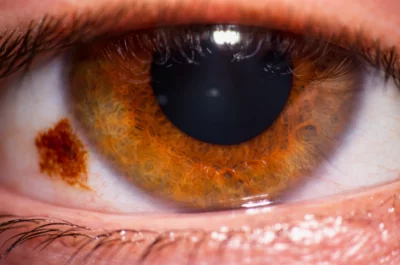
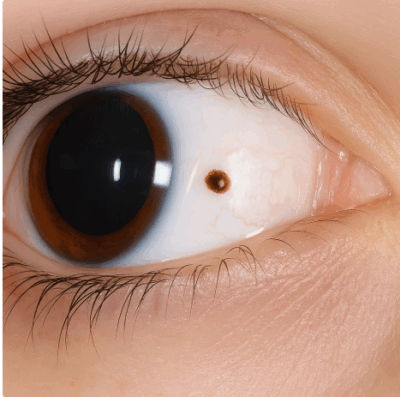
Sometimes patients report seeing a black dot in the iris. While floaters typically appear in the visual field, pigmented dots on the iris (the coloured part of the eye) may be due to freckles, moles, or benign pigmentation. Identifying the exact location of the black dot is essential for accurate diagnosis and treatment.
Common Symptoms to Watch For
The symptoms associated with black dots in or around the eye can vary based on their origin. Some people notice them as small floating spots, while others experience them as fixed marks on the iris or eyelid.
- Tiny moving specks or spots: Usually due to vitreous floaters.
- A black dot in the iris of the eye: May indicate harmless pigmentation or, rarely, an iris nevus (a type of mole).
- A black dot on the upper eyelid: Could result from a small cyst, pigmentation, or debris lodged in the eyelid tissue.
- Sudden appearance of many small black dots: This may require urgent medical attention as it can signal retinal tears or bleeding.
Why Do Black Floaters Appear?
Many wonder, “Why do I have a black dot in my eye?” The causes can range from natural ageing to more complex eye conditions. Below are the most common explanations:
1. Age-Related Vitreous Changes
With age, the vitreous gel in the eye begins to liquefy and shrink. Small fibres within it clump together, casting shadows on the retina that appear as black floaters. This is a common and usually harmless cause.
2. Retinal Detachment or Tear
In some cases, a black dot means more than just harmless floaters. If the vitreous pulls on the retina forcefully, it can cause a tear or detachment. Symptoms include a sudden shower of floaters, flashes of light, or partial vision loss. This is a medical emergency.
3. Bleeding in the Eye (Vitreous Haemorrhage)
Bleeding from retinal blood vessels due to diabetes, hypertension, or trauma can cause multiple small black dots in the visual field. These appear as dark clouds or strands and require urgent evaluation.
4. Inflammation (Uveitis or Posterior Uveitis)
Eye inflammation can lead to floating spots caused by inflammatory cells in the vitreous. In such cases, the floaters may be accompanied by redness, pain, or blurred vision.
5. Pigmentation on the Iris or Eyelid
A visible black dot in the iris may result from benign pigment spots or freckles. In rare cases, these could be early signs of melanoma, so monitoring changes in size or shape is crucial. Similarly, a black dot on the upper eyelid may be due to pigmentation or blocked glands.
Treatment for Eye Floaters
Observation and Monitoring
For most people, floaters are a normal part of ageing. Ophthalmologists typically recommend observation, especially if the floaters are mild and not affecting vision. Regular eye check-ups help prevent retinal damage over time.
Vitrectomy Surgery
In severe cases where black floaters interfere with daily activities, a vitrectomy may be performed. This surgical procedure removes the vitreous gel and replaces it with a saline solution. While effective, it carries risks such as infection or retinal detachment, so it is reserved for serious cases.
Laser Therapy (Laser Vitreolysis)
This minimally invasive treatment uses laser energy to break up floaters, reducing their visibility. Laser therapy is suitable for patients with distinct floaters located away from the retina and lens.
Lifestyle Management
If floaters are mild, lifestyle adjustments can help:
- Stay hydrated and maintain a balanced diet rich in antioxidants.
- Protect eyes from UV rays using sunglasses.
- Avoid smoking, which accelerates eye ageing.
- Manage conditions like diabetes and hypertension to prevent eye complications.