


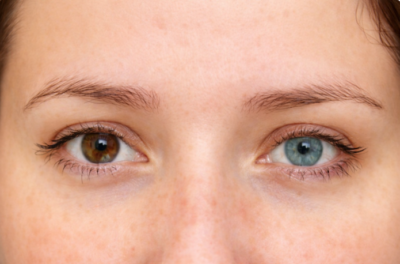
Heterochromia is a rare eye condition in which a person has different coloured eyes or more than one colour within the same eye. It occurs due to variations in iris pigmentation and affects fewer than 1% of people worldwide.
While it often draws attention, heterochromia of the eyes is usually harmless and does not affect vision. In most cases, the condition reflects natural genetic variation rather than disease.
What Is Heterochromia?
Heterochromia is defined as a difference in colour between the irises or within a single iris. The heterochromia meaning comes from Greek roots meaning “different colour”. Medically, heterochromia refers to the uneven distribution or concentration of melanin in the iris, the coloured part of the eye.
The iris gains its colour from melanin. Higher melanin levels produce brown eyes, while lower levels result in blue or green eyes. Differences in melanin deposition lead to visible colour variation.
Notably, the definition of heterochromia does not include vision impairment in most cases.
Definition and Meaning of Heterochromia Iridum/Iridis
Heterochromia iridum or heterochromia iridis describes a difference in iris colour either between the two eyes or within one eye. The condition may involve the entire iris or only a portion, known as sectoral heterochromia.
How Genetics and Pigment Determine Eye Colour
Eye colour is influenced by multiple genes, including OCA2 and HERC2, which regulate melanin production. The way melanin is distributed and how light scatters through the iris determine the final eye colour. Small genetic differences during development can lead to heterochromia without affecting eye health.
Types of Heterochromia
Heterochromia is classified based on how pigment variation appears in the iris.
Complete Heterochromia
Complete heterochromia occurs when one iris is entirely a different colour from the other, such as one blue eye and one brown eye. This form is often present from birth and rarely linked to disease.
Sectoral (Partial) Heterochromia
Sectoral heterochromia affects only part of one iris. A wedge or patch of a different colour appears within the iris. This type may be inherited or develop later in life.
Central Heterochromia
Central heterochromia appears as a ring of one colour surrounding the pupil, with a different colour at the outer iris. This creates a two-toned appearance and is distinct from general colour blending.
Central Heterochromia vs. Hazel Eyes
|
Feature |
Central Heterochromia |
Hazel Eyes |
|
Colour Pattern |
Features a clearly defined inner ring that contrasts with the outer iris. |
Displays a uniform mix of colours across the entire iris. |
|
Transition |
Has a distinct boundary between the different colour zones. |
Colours are blended together rather than following a distinct pattern. |
|
Visual Appearance |
Two separate, non-blending colour sections. |
A cohesive, multifaceted colour throughout. |
Causes of Heterochromia
Congenital Heterochromia: Inherited and Developmental Causes
Congenital heterochromia is present at birth or appears shortly afterwards. It may occur without other health concerns or be associated with conditions such as Waardenburg syndrome, Sturge Weber syndrome, Horner’s syndrome, piebaldism, Hirschsprung disease, and Bloch-Sulzberger syndrome. Infants with heterochromia should be examined to rule out underlying disorders.
Acquired Heterochromia: Conditions and Triggers in Adults
Acquired heterochromia develops later in life due to factors such as eye injury, inflammation, uveitis, eye surgery, glaucoma, or medications like prostaglandin analogues used in glaucoma treatment. Other causes include Fuchs’ heterochromic cyclitis, pigment dispersion syndrome, ocular melanosis, iris tumours, diabetes mellitus, neuroblastoma, melanoma, and vascular conditions.
Heterochromia in Infants vs. Heterochromia in Adults
Infants may experience natural changes in eye colour during the first year of life. Persistent or new heterochromia in children or adults requires evaluation, as later-onset changes are more likely to indicate an underlying condition.
Symptoms and Risk Factors
Heterochromia symptoms are usually limited to visible colour differences. The condition itself does not cause pain or visual changes.
However, associated diseases may cause drooping eyelids, blurred vision, headaches, or eye discomfort. Risk factors include genetic syndromes, ocular trauma, tumours, inflammation, and certain medications.
Diagnosis and Evaluation
Diagnosis begins with a comprehensive eye examination by an ophthalmologist. The doctor assesses iris pigmentation, visual acuity, and eye pressure. Imaging or blood tests may be ordered if an underlying condition is suspected.
Professional evaluation helps distinguish heterochromia from normal colour variation.
When to See a Doctor
Seek medical advice if heterochromia appears suddenly, follows injury, or is associated with pain or vision changes. Infants with differently coloured eyes should also be assessed.
Can Heterochromia Change Over Time?
Minor colour changes can occur during infancy. Significant changes after early childhood are uncommon and often indicate disease, requiring prompt investigation.
Treatment and Management
Heterochromia itself does not require treatment. Management focuses on identifying and treating the underlying cause.
Treating Underlying Conditions
Conditions such as glaucoma, uveitis, tumours, or systemic diseases require targeted medical or surgical treatment. Addressing the cause may prevent further pigment changes.
Cosmetic Considerations and Tinted Contact Lenses
Some individuals choose tinted contact lenses for cosmetic symmetry. These lenses should be prescribed and fitted by eye care professionals. Others prefer to keep heterochromia as a distinctive personal feature.
Living with Heterochromia
Most people with heterochromia have normal vision and eye health. Regular eye exams support long-term well-being. Those who feel self-conscious may benefit from peer support or counselling.
Conclusion
Heterochromia describes a rare condition in which different iris colours occur within or between eyes. Most cases are benign and genetically determined. However, heterochromia can signal underlying conditions, particularly when it develops later in life.
Early evaluation ensures appropriate care. While treatment targets the cause rather than the colour difference, cosmetic options exist for those who desire them.