



Silk Eye Surgery is revolutionizing the world of laser vision correction with its advanced, bladeless technique. Offering a more precise and less invasive alternative to traditional methods like LASIK, this innovative procedure provides quick recovery times and long-lasting results. Whether you’re struggling with myopia (nearsightedness) or astigmatism, Silk Eye Surgery could be the key to achieving clearer, sharper vision. In this guide, we’ll explore how Silk Eye Surgery works, its benefits, and how it compares to other refractive surgeries.
What is Silk Eye Surgery?
Silk Eye Surgery, or Smooth Incision Lenticule Keratomileusis (SILK), is a state-of-the-art procedure in the field of laser vision correction. This technique builds upon the principles of Small Incision Lenticule Extraction (SMILE), combining them with advanced femtosecond laser technology to provide patients with a highly accurate and minimally invasive solution for correcting refractive errors such as myopia (nearsightedness) and astigmatism.
What makes Silk Eye Surgery unique is its precision. The procedure involves using the femtosecond laser (known as ELITA) to create a small, disc-shaped lenticule in the cornea. This lenticule is then removed through a micro-incision, which is typically about 2 mm. Unlike other refractive procedures, this method avoids the creation of a corneal flap, reducing complications and ensuring a quicker recovery.
How Does Silk Eye Surgery Improve Vision?
The cornea is the eye’s primary lens, responsible for most of the light refraction. When the cornea is irregularly shaped due to refractive errors, it causes light to focus improperly on the retina, resulting in blurred vision. Silk Eye Surgery corrects this by reshaping the cornea through the precise removal of the lenticule, restoring the proper focus of light.
One of the advantages of this procedure is that it preserves the corneal structure better than traditional flap-based surgeries. As a result, Silk Eye Surgery maintains corneal biomechanics, reduces the risk of flap-related complications, and offers many patients clearer vision, often achieving 20/20 or better.
Step-by-Step Guide to Silk Eye Surgery
Pre-Surgery Evaluation: Your First Step Towards Clear Vision
Before undergoing Silk Eye Surgery, it is essential to ensure you are an ideal candidate. During a comprehensive eye exam, an ophthalmologist will assess your refractive errors, corneal thickness, and overall eye health. Most candidates are adults with stable prescriptions for at least six months. Common refractive errors suitable for treatment include myopia up to -8 to -12 diopters and astigmatism up to -3 to -6 diopters.
How the Laser Vision Correction Works
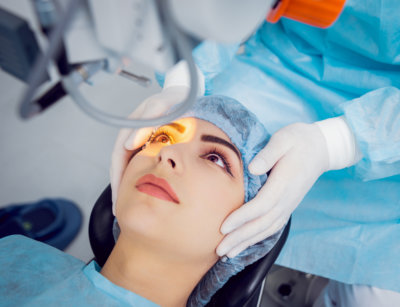
- Preparation & Numbing: The procedure begins with the application of numbing eye drops to ensure you are comfortable. The eye is thoroughly cleaned, and sedation is rarely required.
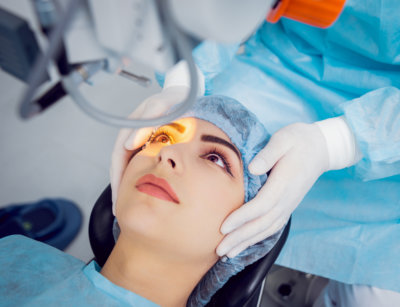
- Laser Mapping & Lenticule Creation: The femtosecond laser maps the cornea in high resolution. It then creates a tailored lenticule within the corneal stroma.
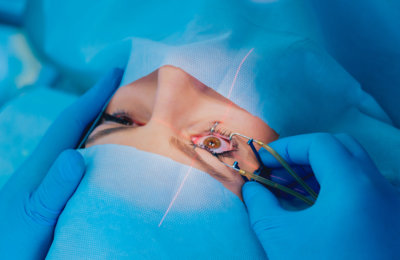
- Micro-Incision & Lenticule Removal: A small, 2mm incision is made, and the lenticule is carefully removed. This reshaping process restores the cornea’s ability to focus light correctly on the retina.
- Recovery: The procedure typically takes under 10 minutes per eye. Most patients experience immediate improvements in vision and are able to go home shortly after the surgery.
Immediate Post-Surgery Recovery
Most patients notice a marked improvement in vision within hours. Minor discomfort, light sensitivity, or dry eyes are common but resolve within a few days. Using prescribed eye drops, avoiding eye rubbing, and wearing protective shields at night can ensure proper healing.
Who is an Ideal Candidate for Silk Eye Surgery?
Silk Eye Surgery is ideal for adults seeking permanent correction of refractive errors. The procedure is particularly appealing for those with thin corneas or who have not qualified for LASIK due to previous dry eye symptoms. The following are typical candidates:
- Age & Stability: At least 18 years old with a stable prescription for at least six months.
- Refractive Errors: Suitable for myopia (up to -8 to -12 D) and astigmatism (up to -3 to -6 D).
- Corneal Health: No previous corneal surgeries or conditions like keratoconus.
- General Health: No severe dry eye conditions or uncontrolled health issues.
Silk Eye Surgery vs LASIK vs SMILE
In comparing Silk Eye Surgery with LASIK and SMILE, it’s important to understand key differences. Silk Eye Surgery offers a precision-driven approach without the need for a corneal flap, minimizing risks like dry eye symptoms that can arise from flap creation in LASIK. It also has faster recovery times compared to LASIK and offers the same flap-free comfort as SMILE, but with greater precision.
Why Choose Silk Eye Surgery?
Precision, Comfort, and Speed
Silk Eye Surgery’s laser technology ensures high precision with minimal tissue disruption, offering quick recovery times and lasting results. The bladeless, flap-free design helps maintain corneal integrity, providing a safe, effective alternative to traditional refractive surgeries.
Long-Term Vision Clarity
Patients often report significant improvements in vision within 24 to 48 hours, and because the procedure does not alter corneal biomechanics, it provides stable, long-term results. With lower risks of dry eye symptoms and fewer complications than LASIK, Silk Eye Surgery is becoming an increasingly popular choice for individuals seeking freedom from glasses and contact lenses.
Conclusion
Silk Eye Surgery provides a breakthrough in laser vision correction, offering a precise, minimally invasive solution for improving vision. With its high success rates and fast recovery times, it offers patients a promising option for long-term, clear vision. If you’re considering Silk Eye Surgery, consult with a skilled ophthalmologist to determine whether it’s the right procedure for your specific needs.