



If you have just been told you have glaucoma or you are worried about a family member, the first question is almost always the same: is glaucoma curable? It is one of the most searched questions about this condition, and the honest answer surprises many people. Glaucoma is not curable, but it is highly treatable, and with timely care most people keep useful vision for life.
The bigger danger is misinformation. Because the most common form of glaucoma causes no pain and no early symptoms, it is often called the “silent thief of sight,” and the myths surrounding it cause people to delay the very care that protects their vision. This guide answers the key questions about glaucoma treatment, symptoms and causes, and then debunks seven of the most common glaucoma myths.
What Is Glaucoma?
Glaucoma is a group of eye conditions that gradually damage the optic nerve, the nerve that carries visual information from the eye to the brain. This damage is usually linked to raised intraocular pressure (IOP), the fluid pressure inside the eye, though glaucoma can also occur at normal pressure.
The damage is progressive and, once it has happened, irreversible. That is why glaucoma is the second leading cause of blindness worldwide after cataract, and the leading cause of irreversible blindness. In India, it is one of the leading causes of permanent vision loss: an estimated 12 million people are affected, and roughly 90% of cases remain undiagnosed until the disease is advanced.
Types of Glaucoma
There is no single disease; there are several types of glaucoma, and they behave differently:
- Open-angle glaucoma – the most common type. It progresses slowly and silently, with no early symptoms.
- Angle-closure glaucoma – can develop slowly or strike suddenly. Acute angle-closure is a medical emergency.
- Normal-tension glaucoma – optic nerve damage occurs even though eye pressure stays in the normal range.
- Congenital glaucoma – present from birth or early childhood, caused by abnormal drainage development.
- Secondary glaucoma – results from another cause such as eye injury, diabetes, or long-term steroid use.
Is Glaucoma Curable? The Honest Answer
There is currently no cure for glaucoma, and vision already lost to it cannot be restored. So if you are asking “can glaucoma be cured?”, the accurate answer is no, but that is not the same as untreatable.
Glaucoma is a chronic condition that is managed, much like high blood pressure or diabetes. The goal of treatment is to lower eye pressure and slow or stop further optic nerve damage, preserving the vision you still have. Caught early and managed consistently, glaucoma rarely leads to blindness. The real risk comes from late diagnosis and stopping treatment, not from the disease being hopeless.
Glaucoma Treatment Options
Glaucoma treatment is tailored to the type and stage of the disease and to how your eyes respond. Most options work by reducing intraocular pressure. They include:
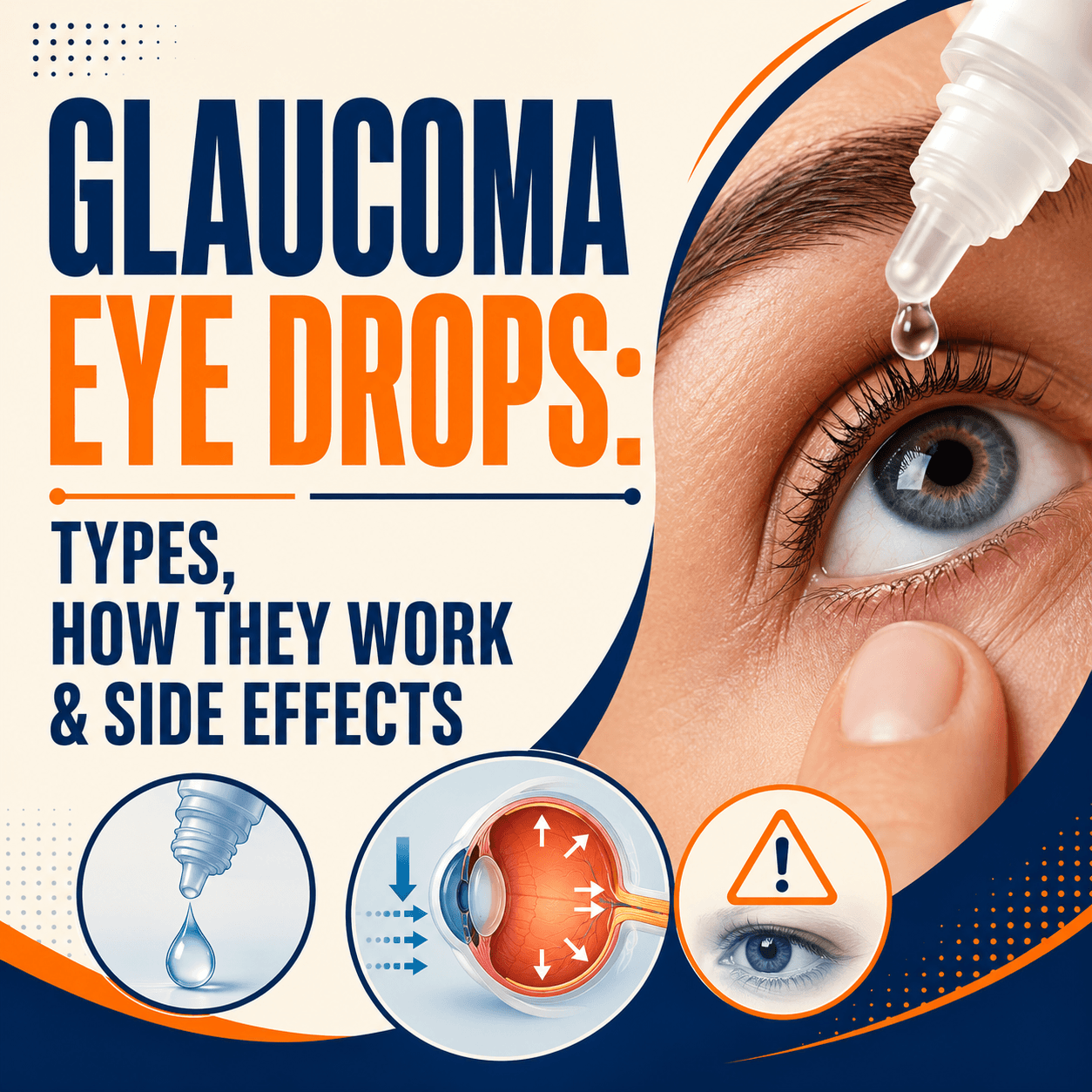
- Glaucoma eye drops – usually the first-line treatment, used daily to lower eye pressure. Consistency is essential; skipping doses allows pressure to climb.
- Oral medication – tablets are sometimes added when eye drops alone are not enough.
- Laser treatment for glaucoma – such as laser trabeculoplasty (to improve fluid drainage in open-angle glaucoma) or laser iridotomy (used in angle-closure glaucoma).
- Glaucoma surgery – including trabeculectomy, drainage implants, and minimally invasive glaucoma surgery (MIGS) for selected cases.
No treatment can reverse existing damage, but the right combination can keep glaucoma stable for decades.
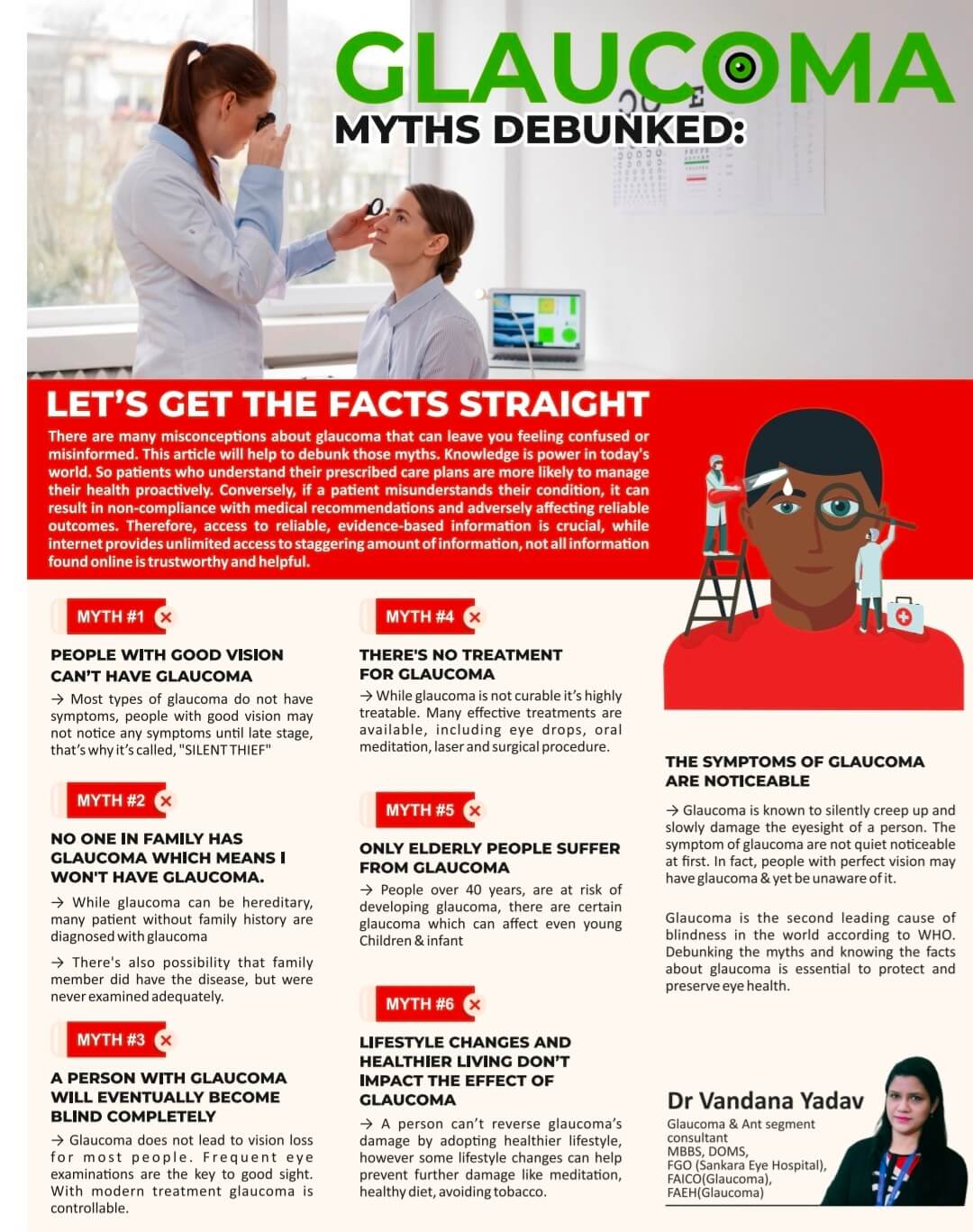
7 Common Glaucoma Myths Debunked
Misunderstanding glaucoma leads people to skip exams and abandon treatment. Here are seven myths worth dropping.
Myth 1: “People with good vision can’t have glaucoma”
You can have glaucoma and still see perfectly for years. Open-angle glaucoma affects peripheral (side) vision first, and the brain fills in the gaps, so the loss often goes unnoticed until it reaches central vision. Clear sight today is not proof of healthy eyes.
Myth 2: “No one in my family has it, so I’m safe”
A family history raises your risk, but its absence does not protect you. Many people diagnosed with glaucoma have no known family history. A relative may also have had it without ever being diagnosed so if you have glaucoma, encourage close family to get checked.
Myth 3: “Glaucoma always leads to total blindness”
Vision already lost cannot return, but that does not mean everyone goes blind. The large majority of people diagnosed early and treated consistently keep functional sight for life. Severe vision loss is usually linked to late diagnosis or interrupted treatment.
Myth 4: “There’s no treatment for glaucoma”
As covered above, glaucoma is not curable but is very treatable with eye drops, oral medication, laser, and surgery. The aim is to preserve vision, and modern treatment makes glaucoma highly controllable.
Myth 5: “Only elderly people get glaucoma”
Risk rises after 40 and more so after 60, but glaucoma can affect any age. Babies can be born with congenital glaucoma, and younger adults can develop it through injury, steroid use, or other eye conditions. “I’m too young for glaucoma” is not a safe assumption.
Myth 6: “Lifestyle and healthy living make no difference”
Lowering eye pressure through medical treatment is the only proven way to control glaucoma, and no lifestyle change can reverse damage. That said, research increasingly suggests healthy habits may support eye health alongside treatment, regular aerobic exercise, a diet rich in leafy greens and antioxidants, not smoking, and managing diabetes and blood pressure. Some early studies even link meditation to modest reductions in eye pressure, though this evidence is still developing. One caution: strenuous head-down yoga inversions can raise eye pressure, so discuss your exercise routine with your ophthalmologist.
Myth 7: “Glaucoma symptoms are easy to notice”
In its most common form, glaucoma is silent, no pain, no early blurring. A person with apparently perfect vision can have it and be unaware. Because you cannot rely on symptoms, routine eye exams are the only dependable way to catch glaucoma early.
Glaucoma Symptoms and Early Warning Signs
Early open-angle glaucoma usually has no symptoms at all, which is why screening matters. When signs do appear, the early signs of glaucoma can include gradual loss of side vision, patchy blind spots, and, in advanced stages, “tunnel vision.”
Acute angle-closure glaucoma is an emergency. Sudden severe eye pain, headache, nausea, blurred vision, eye redness, and halos around lights need immediate care.
Glaucoma Causes and Risk Factors
Glaucoma develops when the optic nerve is damaged, often due to elevated eye pressure. Common glaucoma causes and risk factors include:
- Being over 40, with risk rising with age.
- A family history of glaucoma.
- High intraocular pressure, or being a “glaucoma suspect.”
- High myopia (severe short-sightedness).
- Diabetes or high blood pressure.
- Previous eye injury or long-term steroid use.
How Glaucoma Is Diagnosed
A glaucoma test is painless and uses several checks together: tonometry (measures eye pressure), ophthalmoscopy (examines the optic nerve), perimetry (a visual field test), OCT imaging, gonioscopy (views the drainage angle), and pachymetry (measures corneal thickness). No single test is used alone; your doctor assesses the full picture and the stage of any damage.
Can You Prevent Glaucoma?
Glaucoma cannot always be prevented, but vision loss from it very often can. The most effective steps for glaucoma prevention are:
- Get regular comprehensive eye exams especially after 40, or earlier with risk factors.
- Follow your treatment exactly if diagnosed – consistency with eye drops is critical.
- Know and share your family history with your eye doctor.
- Protect your eyes from injury and manage conditions like diabetes.
Conclusion
So, is glaucoma curable? No, but it is one of the most manageable serious eye conditions when caught early. The real threat is not the disease itself but the myths that delay diagnosis and treatment. Clear vision is not a guarantee, glaucoma is not just an “old person’s disease,” and effective glaucoma treatment exists at every stage.
If it has been more than a year or two since your last eye check or if you have any risk factors, a comprehensive eye examination is the single most powerful step you can take to protect your sight.