


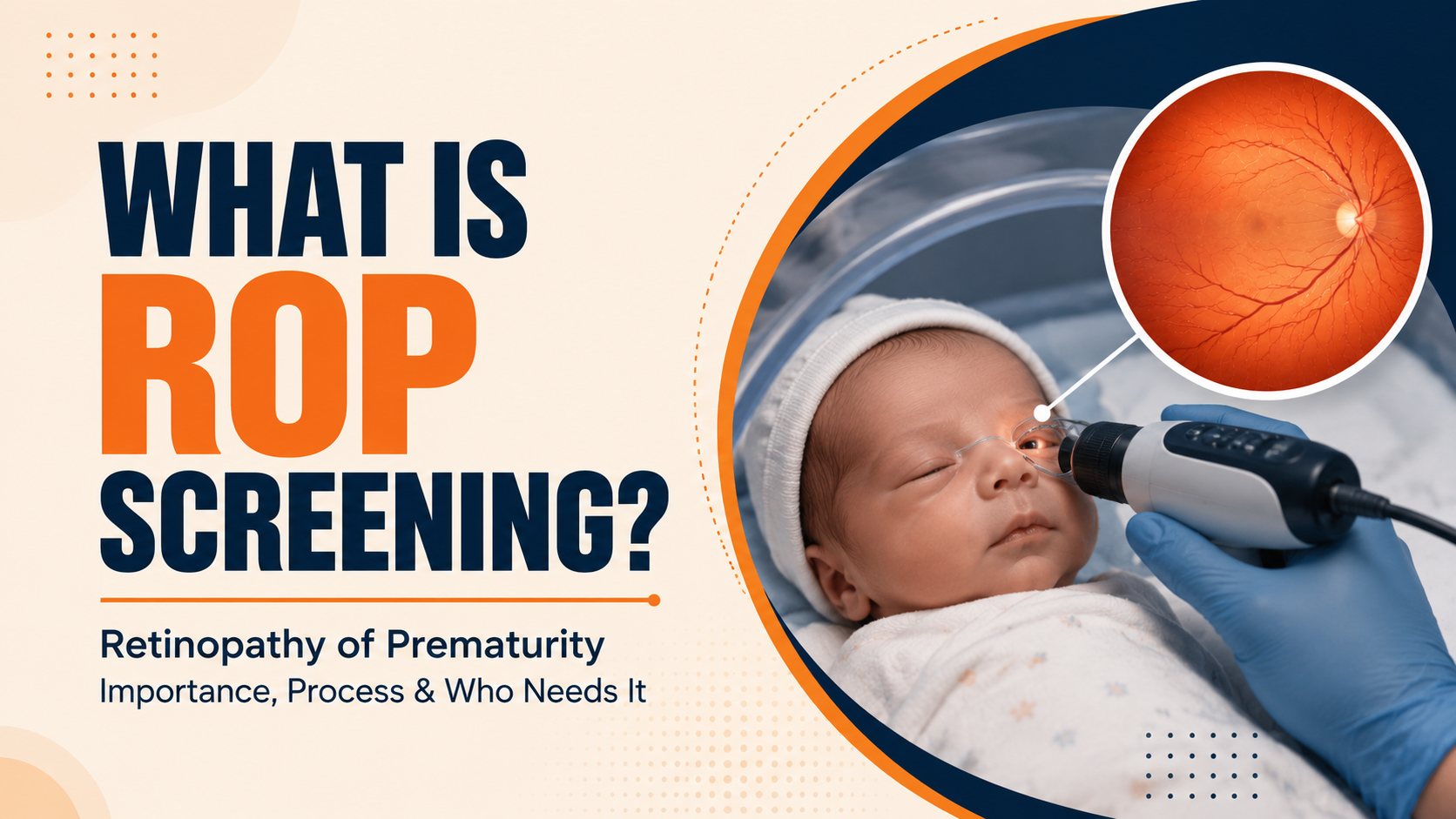
ROP screening is a simple, painless eye examination that checks premature babies for retinopathy of prematurity — a potentially blinding condition that affects the developing retina. Because severe ROP can progress quickly and silently in the first weeks of life, timely ROP screening is one of the most important steps in protecting a premature baby’s eyesight. The good news is that when ROP is detected early through screening, it is highly treatable, and blindness can almost always be prevented. This guide explains what ROP screening means, who needs it, how the test is done, what it costs in India, and why it should never be skipped.
ROP Screening Meaning and Full Form Explained Clearly
What is ROP Screening in Simple Terms?
In simple words, ROP screening is a specialised eye test for premature babies. An eye doctor examines the baby’s retina — the light-sensitive layer at the back of the eye — to check whether its blood vessels are developing normally. The aim is the early detection of retinal problems before they can threaten the baby’s vision.
ROP Screening Full Form and Why It Matters
The full form of ROP is Retinopathy of Prematurity. In other words, ROP stands for Retinopathy of Prematurity — a disease in which the retinal blood vessels of a premature baby grow abnormally. It matters because retinopathy of prematurity is one of the leading causes of preventable childhood blindness, and screening is the only reliable way to catch it in time.
Why ROP Screening is Important for Premature Babies
How ROP Can Affect Vision Development
When a baby is born too early, the blood vessels that nourish the retina are not yet fully formed. In ROP, these vessels can grow abnormally and form fragile, disorganised new vessels. If the disease advances, this abnormal growth can scar and pull on the retina, leading to retinal detachment and permanent vision loss.
Importance of Early Detection Through ROP Screening
The single biggest factor in a good outcome is early detection. Caught early, most cases of ROP either resolve on their own or respond very well to treatment. Caught late, the same disease can cause irreversible blindness. This is exactly why ROP screening is built into the routine care of at-risk newborns — early treatment means a far better chance of saving sight.
Who Needs ROP Screening? Understanding the Criteria
ROP Screening Criteria Based on Birth Weight and Gestational Age
ROP screening is recommended for premature and low-birth-weight babies. Internationally, screening is often advised for babies born at or below about 1,500 g or before roughly 32 weeks of gestation. Importantly, Indian screening guidelines recommend a broader net — generally babies weighing up to 2,000 g or born at or before 34 weeks — because in India ROP can also affect bigger, more mature babies. Your neonatologist and eye specialist follow these medically supervised guidelines to decide who needs screening.
Other Risk Factors That Require ROP Screening
Beyond birth weight and gestational age, certain risk factors mean even a slightly larger baby should be screened, including:
- Prolonged or high-concentration oxygen therapy
- A stormy or complicated NICU course
- Infections or sepsis
- Other illnesses such as breathing difficulties or the need for blood transfusions
ROP Screening Test Procedure Step by Step
The ROP screening test is quick and is performed by a trained eye specialist, often right in the NICU.
Preparation Before the ROP Screening Test
Before the ROP test for newborns, the team checks that the baby is medically stable. Feeds are usually timed so that the baby is comfortable, and the examination is scheduled to cause the least disturbance.
Use of Eye Drops During ROP Screening
Specially formulated dilating eye drops, safe for newborns, are placed in the baby’s eyes to widen the pupils so the retina can be seen clearly. A numbing (anaesthetic) drop is also used for comfort. Parents can be reassured that these drops are used carefully and in doses appropriate for tiny babies.
How the ROP Screening Test is Performed
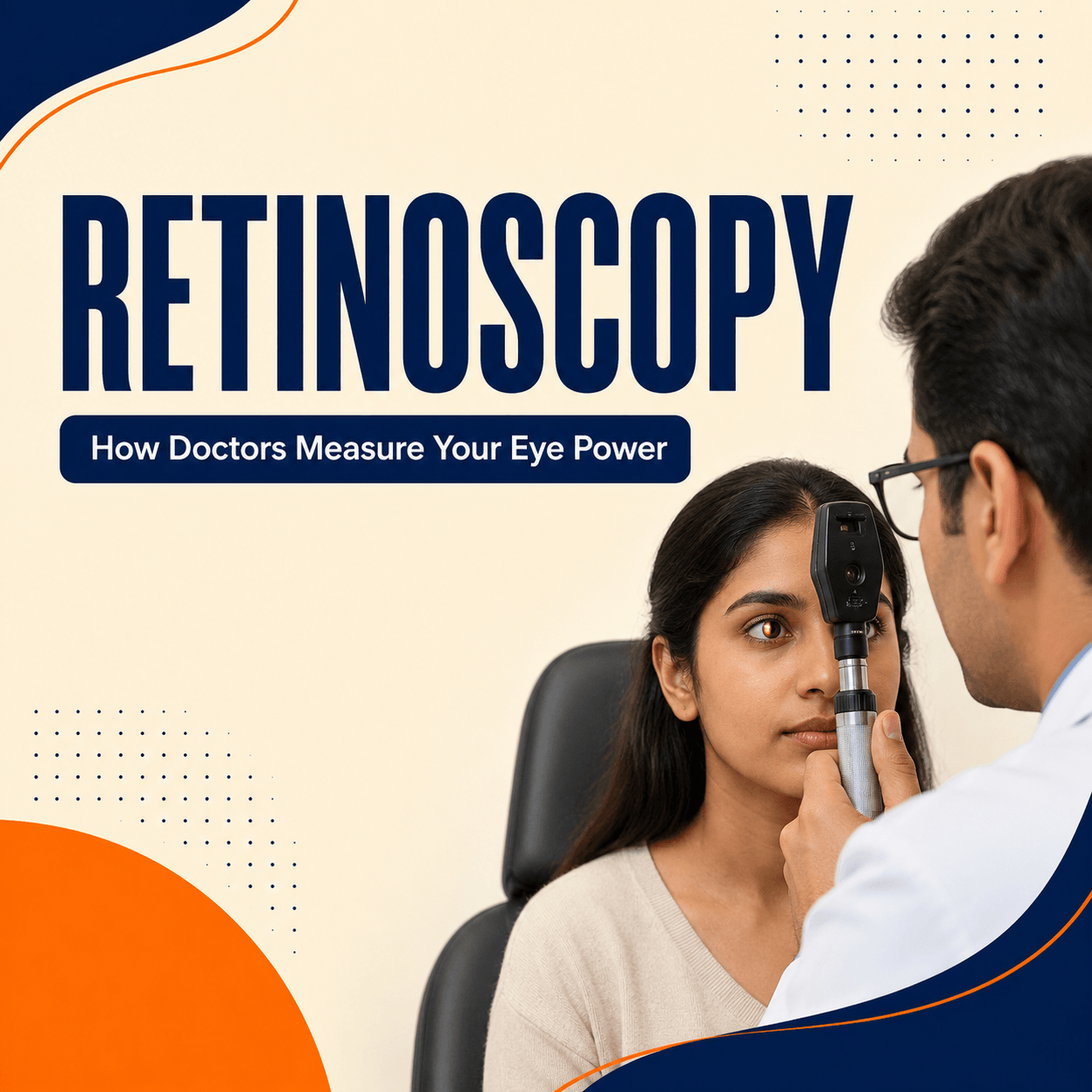
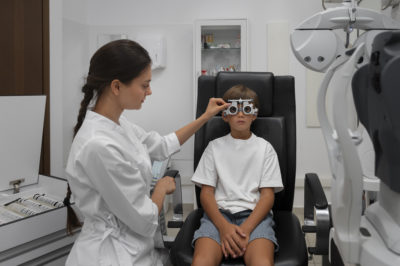
The doctor gently examines the retina using an indirect ophthalmoscope, or captures images with a wide-field retinal camera. A small instrument keeps the eyelids open during the brief examination. The whole ROP eye test usually takes only about 5 to 10 minutes.
Is the ROP Screening Test Painful for Babies?
The test is not a surgery and is not considered painful. Babies may feel mild, temporary discomfort or pressure during the examination, but with gentle handling and numbing drops, any distress is brief and settles quickly.
ROP Screening Test Price and Cost in India
Average ROP Screening Cost in India
The ROP screening test price in India is generally modest, often ranging from around ₹500 to ₹2,500 per session, though this is approximate and varies by city and hospital. Imaging-based screening with a wide-field retinal camera may cost a little more than a standard examination.
Factors Affecting ROP Screening Test Price
Several factors influence the cost, including the type of hospital, whether advanced retinal imaging equipment is used, and the expertise of the specialist performing the test.
Is ROP Screening Covered Under Insurance or Government Programs?
ROP screening is often included within NICU care packages, and some health insurance plans and government child-health programmes (such as national newborn screening initiatives) help cover it. It is worth asking your hospital what is included so cost is never a reason to delay screening.
When Should ROP Screening Be Done? (Ideal Timeline)
First Screening Timeline for Premature Babies
The first ROP screening is typically done around 3 to 4 weeks after birth (and not later than 4 weeks of age for very premature babies), following established ROP screening guidelines. Timing is important because the disease tends to develop in a predictable window after birth.
Follow-Up Schedule for ROP Screening
After the first test, follow-up screenings are scheduled based on what the doctor finds. Depending on severity, repeat examinations may be advised weekly or every two weeks until the retina has fully matured or any treatment is complete.
What Happens After ROP Screening? Next Steps Explained
Normal Results vs Abnormal Findings
If no ROP is found, the baby is monitored until the retina matures and screening can safely stop. If ROP is present, it is graded by severity — from mild, which often regresses on its own, through moderate, to severe disease. Doctors describe the stages of retinopathy of prematurity using a standard system of zones, stages, and a warning sign called “plus disease.”
Treatment Options if ROP is Detected
When treatment is needed, effective options exist for retinopathy of prematurity:
- Laser therapy (laser treatment for ROP) — the standard treatment to stop abnormal blood vessel growth
- Anti-VEGF injections — medicine injected into the eye to control abnormal vessels in selected cases
- Surgery — vitreoretinal surgery for advanced disease with retinal detachment
Your retina specialist recommends the most appropriate ROP treatment based on the stage and zone of the disease.
Limitations of ROP Screening
Temporary Side Effects After Screening
After screening, a baby may have mild, short-lived effects such as eye redness or watering, and occasionally some fussiness or temporary feeding changes. These usually settle on their own.
Why Regular Follow-Up is Important
A single screening is only a snapshot in time. Because ROP can progress between visits, attending every scheduled follow-up is essential — it is the only way to catch any worsening early and act before vision is at risk.
How to Prepare Parents for ROP Screening
What Parents Should Know Before the Test
Parents should understand that screening is a routine, protective step for premature babies, not a sign that something has gone wrong. The team will explain the feeding schedule, timing, and consent before the test.
Tips to Comfort Your Baby During Screening
Gentle measures help babies stay calm — swaddling, a soothing voice, and skin-to-skin contact before and after the examination can all ease any brief discomfort.
Conclusion: Why ROP Screening Should Never Be Missed
For a premature baby, ROP screening can be the difference between lifelong sight and preventable blindness. The disease is treatable when caught early — and undetectable to parents until it is advanced — which is exactly why timely screening and consistent follow-up matter so much. If your baby was born premature or with low birth weight, talk to your neonatologist or an eye specialist about ROP screening, and keep every follow-up appointment. Awareness and early action are the most powerful tools for protecting your child’s vision.