



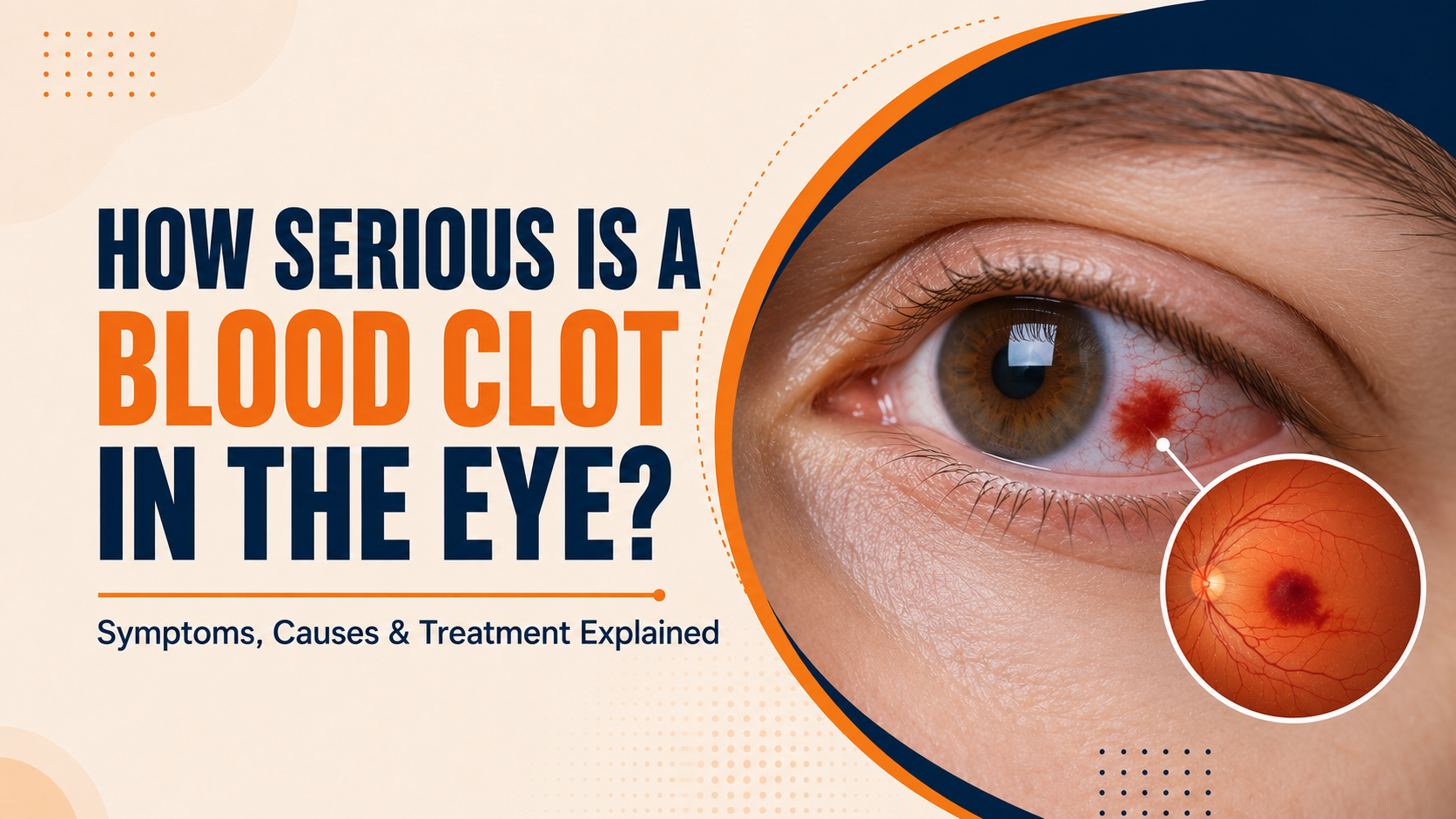
Spotting a bright red patch or what looks like a blood clot in the eye can be alarming — but in most cases, it is far less serious than it appears. The phrase “blood clot in the eye” usually describes a harmless broken blood vessel on the surface of the eye, which clears up on its own. Occasionally, though, it can point to a more serious problem inside the eye that affects vision. This guide explains what a blood clot in the eye really means, how to tell a mild case from a serious one, and what treatment, if any, is needed.
What Is a Blood Clot in the Eye? (Understanding the Condition Clearly)
What does a blood clot in the eye actually mean?
“Blood clot in the eye” is a common, everyday term rather than a precise medical diagnosis. Most often, a red blood clot in the eye refers to bleeding from a tiny broken blood vessel just under the clear surface layer of the eye — known medically as a subconjunctival haemorrhage (also spelled subconjunctival hemorrhage). Less commonly, the term is used to describe a true clot blocking a blood vessel inside the eye, which is a more serious condition. In simple terms, it can mean either harmless surface bleeding or, rarely, an internal blockage.
Types of Blood Clots in the Eye You Should Know
There are two very different conditions people group under “blood in the eye”:
- Subconjunctival haemorrhage (the red patch): A small surface blood vessel breaks, leaving a flat, bright red patch on the white of the eye. It looks dramatic but is usually painless and harmless. This is what most people mean by a blood spot in the eye or a broken blood vessel in the eye.
- Retinal vein occlusion (the serious one): Here, a vein deep inside the eye (in the retina) becomes blocked by a clot. Because it affects the light-sensing layer of the eye, [retinal vein occlusion — internal link] can cause sudden vision problems and needs prompt medical care.
Is a Red Blood Clot in the Eye Always Dangerous?
No — and this is the reassuring part. A red blood clot in the eye on the surface (subconjunctival haemorrhage) is almost always harmless. It does not affect your vision, rarely causes more than mild irritation, and usually clears within a couple of weeks. It only becomes a concern when the bleeding or clot is internal, or when it comes with vision changes or pain — which is when it should be checked promptly.
How Serious Is a Blood Clot in the Eye? (When You Should Worry)
Mild cases vs serious eye conditions
The seriousness depends entirely on where the bleeding or clot is. Surface bleeding (a red patch on the white of the eye) is mild and self-limiting. A blockage in the retina is serious, because it can damage the part of the eye responsible for sight.
Warning signs that need urgent medical attention
See an eye doctor urgently if a blood clot in the eye is accompanied by:
- Sudden loss or blurring of vision
- Eye pain
- New floaters or dark spots in your vision
Can a blood clot in the eye lead to blindness?
A surface subconjunctival haemorrhage will not cause blindness. However, a serious internal clot such as a retinal vein occlusion can, if left untreated, lead to lasting vision loss. This is why distinguishing the two — ideally with an eye examination — matters so much.
Blood Clot in Eye Symptoms You Should Not Ignore
Blood clot in eye symptoms vary depending on whether the problem is on the surface or inside the eye.
Common symptoms of blood clot in eye
A surface haemorrhage typically causes a visible red patch on the white of the eye, possibly with mild irritation or a scratchy, gritty feeling. There is usually no pain and no change in vision.
Symptoms of serious internal eye clots
A more serious internal clot may cause blurred vision, dark spots or shadows, floaters, or sudden vision loss — often without any pain or visible redness on the surface.
Why symptoms can appear suddenly
A sudden blood clot in the eye is common because surface vessels can break instantly from a small spike in pressure — such as a hard cough, sneeze, or strain — so the red patch often appears overnight with no warning.
Blood Clot in Eye Causes and Reasons Explained Simply
There are many possible blood clot in eye causes. Understanding the reason behind yours helps you and your doctor decide whether any action is needed.
Common causes of blood clot in the eye
- High blood pressure, which stresses the small, fragile vessels in the eye
- Diabetes, which can weaken and damage blood vessels over time
- Eye injury or minor trauma, including vigorous eye rubbing
Lifestyle and health-related risk factors
Everyday triggers can cause a surface vessel to break, including straining, heavy lifting, intense coughing or sneezing, and smoking. Sometimes a blood spot in the eye appears with no obvious reason at all.
Medical conditions linked to eye blood clots
Certain conditions raise the risk, including blood-clotting disorders, the use of blood-thinning medication, and [glaucoma — internal link], which is associated with retinal vein occlusion.
How Is a Blood Clot in the Eye Diagnosed?
Eye tests your doctor may perform
To find the cause and rule out anything serious, an eye doctor may carry out a vision test and a detailed examination of the eye, including a dilated retinal scan to check the blood vessels inside the eye. Your blood pressure and, sometimes, blood tests may also be checked.
Why early diagnosis matters for vision protection
While a surface haemorrhage needs no treatment, an internal clot is time-sensitive. Early diagnosis allows serious causes such as retinal vein occlusion to be treated quickly, which gives the best chance of protecting your vision.
Blood Clot in Eye Treatment Options (Based on Severity)
Blood clot in eye treatment depends entirely on the type and severity.
Treatment for minor blood clots (surface bleeding)
A subconjunctival haemorrhage usually needs no treatment at all. It clears on its own as the body reabsorbs the blood, much like a bruise fading.
Medical treatments for serious blood clots
For a serious internal clot such as a retinal vein occlusion, treatment may include eye injections, [anti-VEGF injections — internal link] to reduce swelling and leakage, or laser therapy, depending on the case.
Blood clot in eye medicine: what doctors may prescribe
There is no tablet or drop that dissolves a clot in the eye. For internal clots, doctors may use anti-VEGF medicine or steroids delivered as eye injections; for surface bleeding, no medicine is usually required.
Eye Drops for Blood Clot in Eye – Do They Really Help?
When eye drops are useful
Lubricating eye drops (artificial tears) can soothe mild irritation or a gritty feeling while a surface haemorrhage heals. They improve comfort but do not speed up healing.
When eye drops are not enough
It is important to be clear: no eye drops for a blood clot in the eye can dissolve or cure a clot. Internal clots such as retinal vein occlusion need advanced medical treatment, not drops.
How to Get Rid of Blood Clot in Eye Safely
Natural healing timeline of minor clots
A surface subconjunctival haemorrhage clears on its own, usually within about 1 to 2 weeks, gradually changing colour like a fading bruise.
What you should and should not do
While it heals, avoid rubbing the eye, keep any underlying high blood pressure well managed, and use lubricating drops if the eye feels gritty. Avoid self-medicating with unproven products.
Can home remedies help?
This is where it helps to separate myths from facts. There is no home remedy that dissolves a blood clot in the eye. A cold compress may ease discomfort, but the body clears a surface haemorrhage on its own — patience, not a “cure,” is what works.
Can a Blood Clot in the Eye Be Prevented?
Simple lifestyle changes to reduce risk
Keeping blood pressure and diabetes under control protects the delicate blood vessels in the eye and lowers the risk of both surface and internal bleeds.
Eye care habits to protect vision
Avoiding vigorous eye rubbing, managing blood-thinning medication with your doctor, and having [regular eye check-ups — internal link] all help protect your eye health and catch problems early.
When Should You See a Doctor Immediately?
Emergency symptoms you should not ignore
Seek immediate medical attention if a blood clot in the eye comes with sudden vision loss, severe eye pain, or rapidly worsening symptoms — these may signal a serious internal problem.
Who is at higher risk?
Older adults, people with diabetes or high blood pressure, and those on blood-thinning medication are at higher risk and should be especially alert to any change in vision.
Conclusion: Should You Be Worried About a Blood Clot in the Eye?
In most cases, a blood clot in the eye is a harmless subconjunctival haemorrhage that looks worse than it is and clears up on its own within a couple of weeks. Occasionally, though, it can signal a serious internal condition that threatens vision. The key is to watch for warning signs — especially pain or any change in vision — and to get checked when in doubt. Early diagnosis is the single best way to prevent complications and protect your sight.