



When you have an eye problem, knowing which eye doctor to see can be surprisingly confusing. The terms optometrist and ophthalmologist sound similar, and an eye doctor is often simply called an “eye specialist” yet these are different professionals with different training, roles, and abilities. Understanding the optometrist vs ophthalmologist difference helps you choose the right eye care professional, save time, and get the most appropriate treatment for your eyes.
This guide breaks down what each does, how they are trained, and exactly when you should visit one over the other.
Quick Overview: Optometrist vs Ophthalmologist
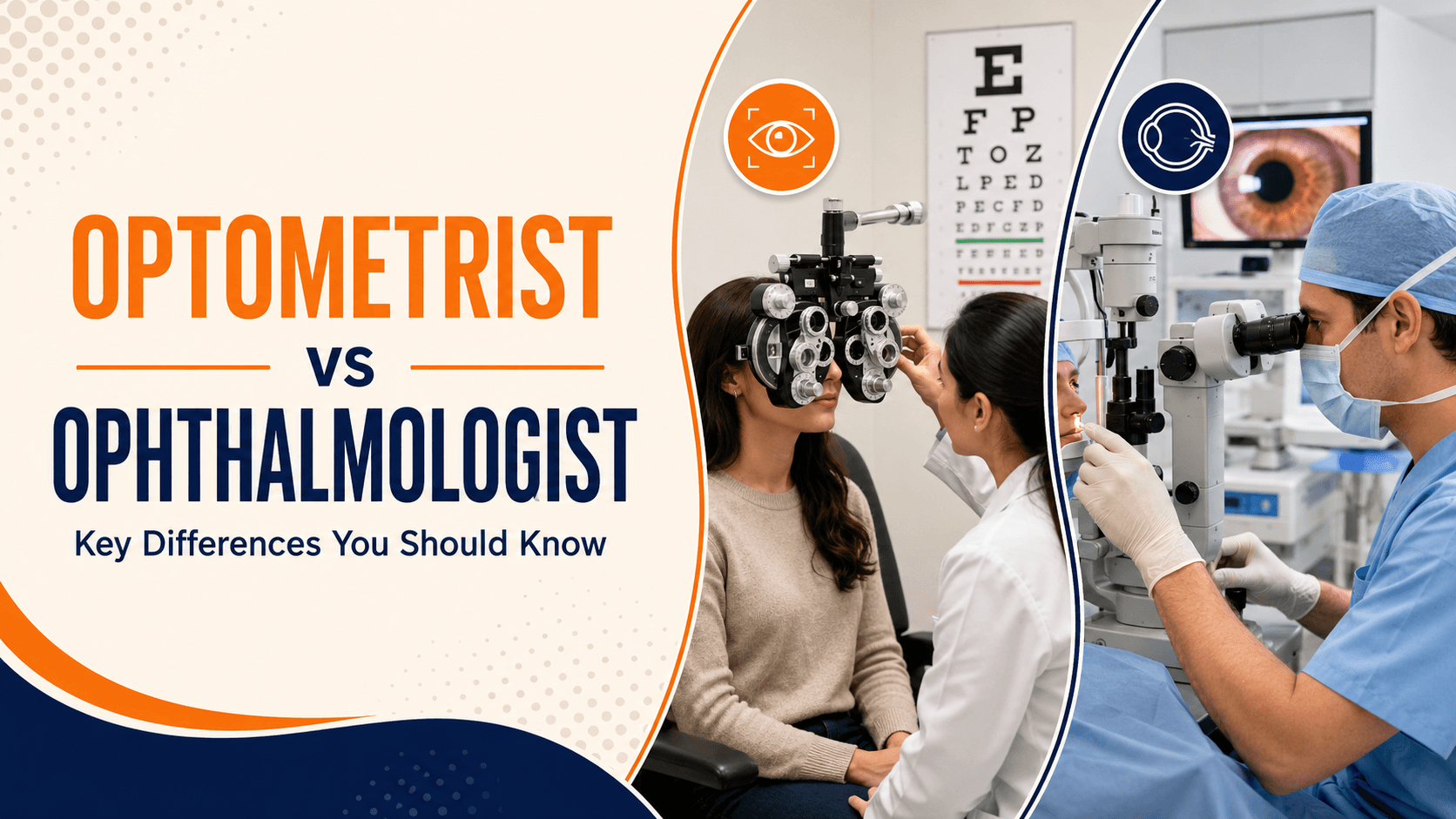
In simple terms, an eye doctor is called either an optometrist or an ophthalmologist. An optometrist is an eye care professional who focuses on eye exams, vision testing, and prescribing glasses and contact lenses. An ophthalmologist is a medical doctor who can diagnose and treat all eye conditions, prescribe medicines, and perform eye surgery. (A third professional, the optician, only fits and supplies eyewear more on that later.)
Here is the optometrist versus ophthalmologist comparison at a glance:
|
Aspect |
Optometrist |
Ophthalmologist |
|
Type of professional |
Eye care professional (not a physician) |
Medical doctor (physician and surgeon) |
|
Education |
Optometry degree (e.g., B.Optom / Doctor of Optometry) |
Medical degree (MBBS) plus specialisation in ophthalmology |
|
Main role |
Eye exams, vision testing, glasses and contact lenses |
Diagnosis and medical or surgical treatment of all eye conditions |
|
Performs surgery |
No |
Yes |
What Is an Optometrist? Role, Training, and Services
The meaning of optometrist is straightforward: an optometrist is a trained eye care professional who examines your eyes, measures your vision, and prescribes corrective lenses. They are usually the first point of contact for routine eye care. It is worth noting that an optometrist’s exact scope can vary from one country to another; in India, optometrists primarily handle vision testing, refraction, and dispensing, and refer patients to an ophthalmologist when medical or surgical care is needed.
Education and qualifications of an optometrist
An optometrist completes a dedicated optometry degree rather than a general medical degree. In India this is typically a Bachelor of Optometry (B.Optom) or B.Sc in Optometry, usually around four years including an internship. In some countries, optometrists earn a Doctor of Optometry (OD) qualification. They are not medical doctors and do not attend medical school in the way physicians do.
Eye problems an optometrist can treat
An optometrist mainly manages vision-related needs, including:
- Refractive errors such as myopia (short-sightedness), hyperopia (long-sightedness), astigmatism, and presbyopia.
- Prescribing and fitting glasses and contact lenses.
- Routine eye examinations and vision screening.
- Detecting early signs of eye conditions and referring you to an ophthalmologist when necessary.
When should you visit an optometrist
See an optometrist for a routine eye check-up, when your vision changes, when you need new glasses or contact lenses, or for a general eye and vision screening. They are ideal for everyday, non-medical eye care.
What Is an Ophthalmologist? Role, Training, and Expertise
The meaning of ophthalmologist is simple: an ophthalmologist sometimes searched for as an “eye specialist doctor” is a fully qualified medical doctor who specialises in eyes and vision. Ophthalmology itself is the branch of medicine that deals with the diagnosis, treatment, and surgery of eye conditions, which is why the eye department in a hospital is usually named the Ophthalmology department. Because of their medical and surgical training, ophthalmologists can do everything an optometrist does and also diagnose and treat eye diseases, prescribe medication, and perform eye surgery.
Medical training and specialization
An ophthalmologist first completes a medical degree (MBBS) and then undergoes years of specialised postgraduate training in ophthalmology (such as an MS, MD, or DNB in India). Many go on to sub-specialise in fields like cataract, glaucoma, retina, cornea, oculoplasty, or paediatric eye care.
Eye diseases treated by ophthalmologists
Ophthalmologists manage the full range of medical eye conditions, including:
- Glaucoma
- Cataract
- Diabetic retinopathy and other retinal diseases
- Age-related macular degeneration
- Corneal diseases and infections
- Uveitis and other inflammatory eye conditions
Surgical procedures performed by ophthalmologists
Unlike optometrists, ophthalmologists are trained eye surgeons. Common procedures include cataract surgery, LASIK and other refractive surgery, glaucoma surgery, retinal and vitreous surgery, corneal transplantation, squint correction, and oculoplastic (eyelid) surgery.
Optometrist or Ophthalmologist: Which One Should You Visit?
Choosing between an optometrist or ophthalmologist depends entirely on what your eyes need.
For routine eye exams and vision correction
For a standard eye test, updating your spectacle power, or getting contact lenses, an optometrist is usually the right and most convenient choice.
For eye infections, allergies, and minor issues
For eye infections, persistent allergies, or symptoms that need medical treatment, an ophthalmologist can examine, diagnose, and prescribe the necessary medication. In India, optometrists typically screen such issues and refer them on for medical care.
For serious eye diseases (glaucoma, cataract, retina issues)
Conditions like glaucoma, cataract, and retinal disease require medical diagnosis and ongoing management, so an ophthalmologist is the appropriate eye specialist to see.
For surgery and advanced treatments
Any surgical or advanced treatment from cataract surgery to LASIK must be performed by an ophthalmologist, as optometrists are not trained or licensed to operate.
Signs That You Should See an Ophthalmologist Instead of an Optometrist
Some symptoms point clearly to the need for a medical eye doctor. Consider seeing an ophthalmologist promptly if you experience:
- Blurred vision that is not improving with glasses or over time.
- Eye pain or an eye injury of any kind.
- Sudden vision loss, which can be a medical emergency.
- Chronic eye diseases such as diabetes-related eye problems, glaucoma, or recurring issues.
- Other warning signs like flashes of light, a sudden increase in floaters, halos around lights, or persistent redness with pain.
When in doubt especially with sudden or painful symptoms it is safest to be assessed by an ophthalmologist.
Can an Optometrist Refer You to an Ophthalmologist?
Yes. Optometrists and ophthalmologists often work together as part of a connected eye care system. During a routine eye exam, an optometrist may detect early signs of a condition such as glaucoma, cataract, or diabetic retinopathy. When that happens, they refer you to an ophthalmologist for detailed diagnosis, medical treatment, or surgery. This teamwork ensures problems are caught early and managed by the right specialist one reason regular eye check-ups are so valuable.
Optometrist vs Ophthalmologist: Side-by-Side Comparison Table
|
Feature |
Optometrist |
Ophthalmologist |
|
Education |
Optometry degree (B.Optom / OD) |
MBBS + postgraduate specialisation in ophthalmology |
|
Services |
Eye exams, vision testing, glasses and contact lenses |
Full eye care, medical treatment, and surgery |
|
Prescriptions |
Glasses and contact lenses (limited medicines where permitted) |
Full range of eye medications |
|
Surgery |
Not performed |
Performs all types of eye surgery |
|
Conditions treated |
Refractive errors and routine vision needs; screens and refers |
Glaucoma, cataract, retina, cornea and all eye diseases |
Conclusion: Understanding Optometrist vs Ophthalmologist for Better Eye Care
Both an optometrist and an ophthalmologist play an important role in protecting your vision they simply do different jobs. For routine eye tests, vision correction, and glasses, an optometrist is ideal. For eye diseases, medical symptoms, or surgery, an ophthalmologist is the eye specialist you need. Knowing the optometrist vs ophthalmologist difference means you can confidently choose the right eye doctor for your situation, and seek timely care when it matters most. If you are unsure or have any concerning symptoms, booking an appointment with a qualified eye doctor near you is always the safest first step.