



n epiretinal membrane (ERM) is a thin layer of scar-like tissue that forms over the macula the central part of the retina responsible for sharp, detailed vision. Also known as a macular pucker or cellophane maculopathy, an epiretinal membrane can slowly wrinkle the surface of the retina and distort your central vision. Many cases are mild and stable, but when an epiretinal membrane progresses, it can make everyday tasks like reading and recognising faces difficult. This guide explains the causes, symptoms, stages, and treatment options in clear, patient-friendly terms.
What is an Epiretinal Membrane and How Does It Affect Vision?
An epiretinal membrane is a fine sheet of cells and fibrous tissue that grows on the inner surface of the retina, directly over the macula. “ERM” is simply the medical abbreviation for epiretinal membrane, and you may also hear it called a macular pucker. It is not a growth or tumour it is more like a delicate film that can tighten over time.
Understanding epiretinal membrane formation in the retina
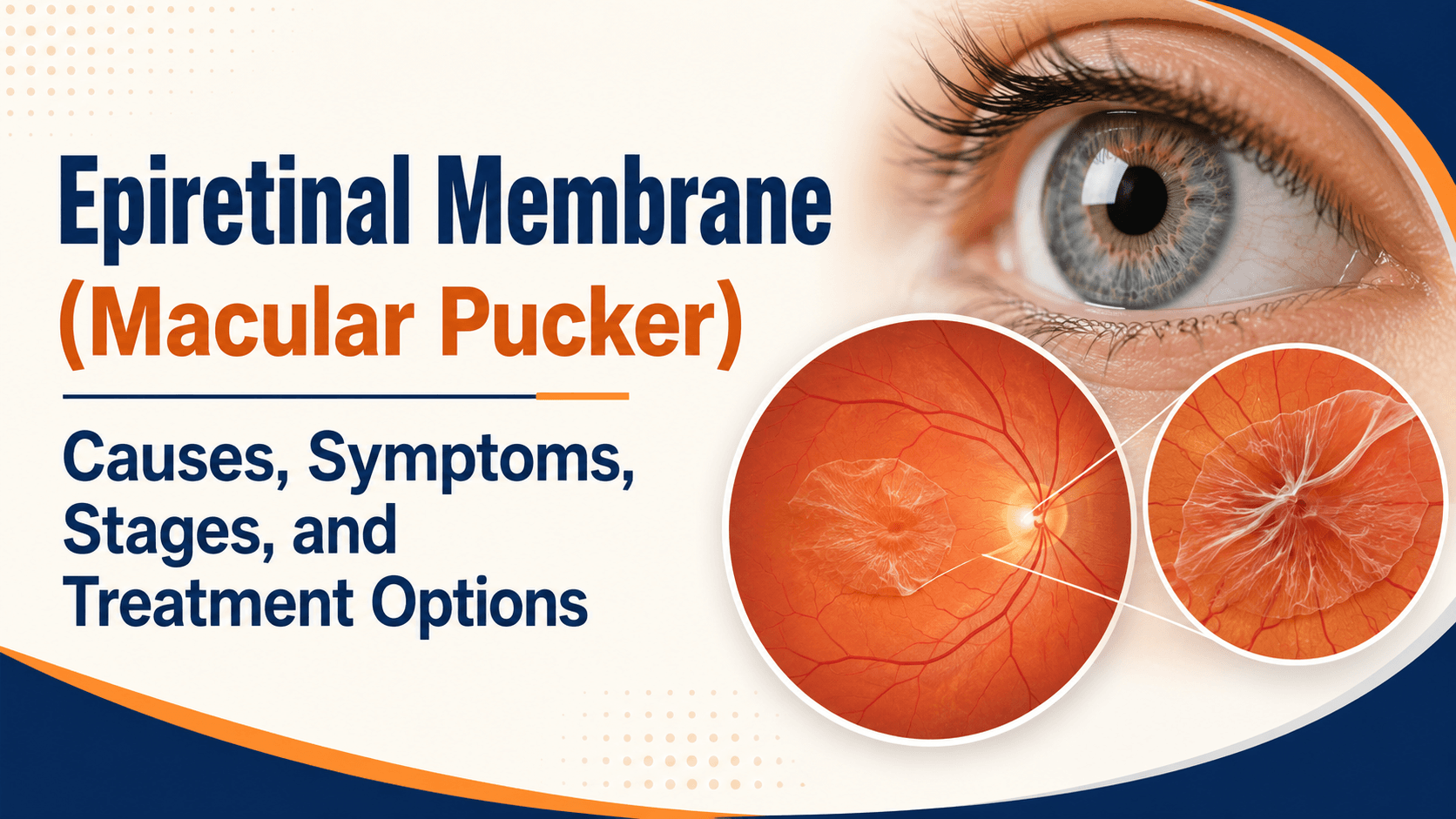
Epiretinal membrane formation begins when cells settle on the retinal surface and form a thin layer of scar-like tissue over the macula. As this layer slowly contracts, it tugs on the delicate retina beneath it, creating a wrinkling or puckering effect — which is exactly why an ERM on the retina is nicknamed “macular pucker.” In its earliest form it may appear as a glistening, cellophane-like sheen on the retina.
Why an epiretinal membrane can distort central vision
Because the membrane sits over the macula, it affects your sharp, central vision rather than your side vision. As the retina wrinkles, light no longer focuses evenly, leading to blurry central vision and a symptom called metamorphopsia — where straight lines appear wavy, bent, or distorted. Reading, driving, and seeing fine detail can all become harder.
What Causes an Epiretinal Membrane?
In most people the cause of an epiretinal membrane is age-related and not linked to any other disease. However, several factors can trigger epiretinal membrane formation.
Age-related changes as a major cause of epiretinal membrane
The most common cause is a natural, age-related change called posterior vitreous detachment (PVD). The vitreous the gel that fills the eye gradually shrinks and pulls away from the retina with age. This separation can stimulate cells to grow on the retinal surface, leading to an ERM. This is why epiretinal membranes are far more common after the age of 50.
Eye conditions linked to epiretinal membrane formation
An epiretinal membrane can also develop secondary to other eye problems, including:
- Diabetic retinopathy and other retinal vascular diseases
- Retinal tears or retinal detachment
- Eye inflammation such as uveitis
Can trauma or surgery trigger epiretinal membrane?
Yes, though less commonly. An eye injury or previous eye surgery including retinal procedures, and in rare cases after cataract surgery can act as a trigger for epiretinal membrane formation.
Epiretinal Membrane Symptoms You Should Not Ignore
Epiretinal membrane symptoms range from barely noticeable to significantly disabling, depending on how much the membrane has contracted. Many people have no symptoms at all and are diagnosed during a routine eye check.
Early epiretinal membrane symptoms and mild vision changes
In early epiretinal membrane, symptoms are subtle. You might notice a slight blur in your central vision or find it a little harder to read small text, while your overall vision still feels mostly normal.
Advanced epiretinal membrane symptoms affecting daily life
As the membrane thickens and contracts, symptoms become more obvious and can include:
- Distorted central vision
- Straight lines appearing curved or wavy (metamorphopsia)
- Double vision in one eye (monocular diplopia)
- Objects appearing a different size in the affected eye
Epiretinal Membrane Stages Explained
While every eye is different, an epiretinal membrane can generally be thought of in stages as it progresses. These stages help your eye doctor describe how advanced the condition is.
Stage 1: Early epiretinal membrane with minimal symptoms
At this stage the membrane is thin and causes little or no visual disturbance. Early epiretinal membrane is often detected by chance during a routine eye exam or an OCT scan, before the patient notices any change.
Stage 2: Progressive membrane causing visual distortion
The membrane thickens and begins to contract, so noticeable symptoms appear typically blurring and metamorphopsia (wavy lines). This is often the point at which patients seek help.
Stage 3: Severe epiretinal membrane with vision impairment
In advanced cases, the puckering significantly distorts central vision and interferes with daily activities such as reading, recognising faces, and driving.
How is Epiretinal Membrane Diagnosed?
Diagnosing an epiretinal membrane is painless and straightforward for a retina specialist.
Role of retinal examination and OCT scan
After dilating the pupils, the doctor examines the retina to look for the tell-tale sheen and wrinkling. The key test is an Optical Coherence Tomography (OCT) scan a quick, non-invasive scan that produces a detailed cross-section of the macula. An epiretinal membrane OCT clearly shows the membrane and any macular thickening or distortion, and helps grade its severity.
When should you visit an eye specialist?
You should see an eye specialist promptly if you notice sudden distortion in your vision, straight lines that look bent, or vision that is steadily worsening. Early assessment ensures the condition is monitored or treated at the right time.
Epiretinal Membrane Treatment Options
Epiretinal membrane treatment depends on how much the membrane affects your vision and daily life. Not every ERM needs surgery.
Observation and monitoring in early epiretinal membrane
For an early epiretinal membrane with mild or no symptoms, the best approach is often simply observation. Many membranes stay stable for years and require no immediate surgery just regular monitoring of your vision.
Medications and non-surgical epiretinal membrane management
It is important to be clear: there are no eye drops or medicines that can dissolve or remove an epiretinal membrane. Non-surgical epiretinal membrane management therefore focuses on monitoring the condition and using updated glasses or low-vision aids to help you cope with mild distortion.
Epiretinal membrane operation: When surgery is needed
When distortion or blurring significantly affects daily life, an epiretinal membrane operation can help. The procedure is a vitrectomy: the surgeon removes the vitreous gel and then gently peels the membrane off the surface of the macula, allowing the retina to relax and flatten. Vitrectomy with membrane peeling is the only definitive treatment for a symptomatic ERM.
Recovery and outcomes after epiretinal membrane treatment
Vision usually improves gradually over several weeks to months as the retina settles. Most patients regain meaningful central vision and see less distortion, although it is realistic to expect improvement rather than perfect restoration, especially if the membrane was present for a long time. Your surgeon will explain the likely outcome for your specific eye.
Who is at Risk of Developing an Epiretinal Membrane?
Understanding the risk factors and the cause of epiretinal membrane can help you stay alert to changes in your vision.
Age and underlying eye diseases
Age is the single biggest risk factor, particularly after 50, largely because of posterior vitreous detachment. A history of retinal tears, retinal detachment, eye inflammation, or previous eye surgery also raises the risk.
Systemic conditions like diabetes
Systemic conditions, especially diabetes, increase the risk because diabetic retinopathy can contribute to epiretinal membrane formation. Keeping diabetes well controlled supports overall retinal health.
Epiretinal Membrane Management Tips for Better Vision
Alongside medical care, a few simple habits support good epiretinal membrane management and help you catch changes early.
Lifestyle changes and regular eye checkups
Attend regular eye check-ups especially if you are over 50 or have diabetes so any change in the membrane is picked up early. Managing systemic health conditions and protecting your eyes supports your retina more broadly, even though lifestyle alone cannot remove a membrane.
Monitoring vision changes at home
You can monitor your central vision at home using an Amsler grid a simple square grid with a central dot. Checking each eye separately, look for any lines that appear wavy, blurred, or missing. If the distortion on the Amsler grid worsens, contact your eye specialist.
Conclusion: When to Take Epiretinal Membrane Seriously
An epiretinal membrane is common with age and is often mild, but it should be taken seriously when symptoms such as blurring or metamorphopsia begin to affect daily life. Knowing the symptoms, understanding the stages, and seeking timely epiretinal membrane treatment make a real difference to the outcome. Early diagnosis through a retinal exam and OCT scan allows your doctor to monitor the condition and recommend surgery at the right moment. If you notice distorted or worsening central vision, do not wait consult a retina specialist promptly.