


Being told you have macular degeneration raises one question immediately: what can be done about it?
The answer depends entirely on which type you have. Dry and wet age-related macular degeneration (AMD) affect the same part of the eye, but they behave differently, progress at different speeds, and are treated in completely different ways. Understanding which you have is the first step to understanding your options.
Key Takeaway: How Is Macular Degeneration Treated?
Macular degeneration treatment depends on the type. Wet AMD is treated with anti-VEGF injections into the eye, which in most patients stabilise vision and in some improve it. Dry AMD has no treatment that restores vision; management focuses on AREDS2 supplements for suitable patients, lifestyle measures and monitoring. Neither form can currently be cured, and vision already lost cannot be recovered. The goal of treatment is to protect the sight you still have, which is why early detection matters so much.
What Is Macular Degeneration?
The macula is the small central part of the retina responsible for sharp, detailed vision, reading, recognising faces, and seeing fine detail. Age-related macular degeneration is progressive damage to this area, and it is a leading cause of central vision loss in older adults.
AMD affects central vision while peripheral vision usually remains. People rarely go completely blind from it, but the vision lost is the vision used for almost every daily task.
There are two forms. Dry AMD is far more common, accounting for the large majority of cases, and generally progresses slowly. Wet AMD is less common but more aggressive, and can cause rapid vision loss over weeks.
Dry vs Wet Macular Degeneration: The Key Differences
|
Feature |
Dry AMD |
Wet AMD |
|
How common |
The large majority of cases |
The minority of cases |
|
What happens |
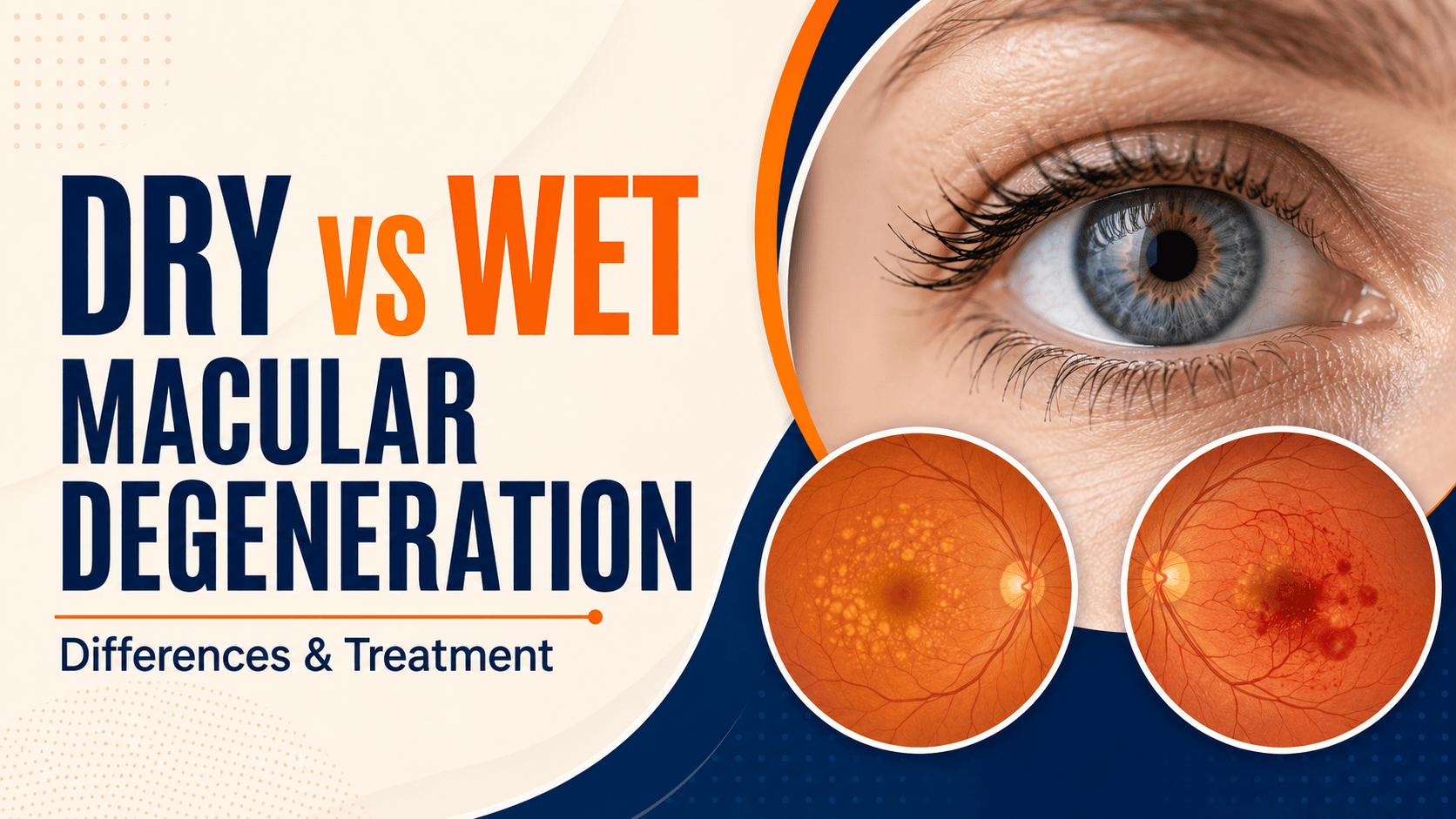
Gradual thinning of the macula, with yellow deposits called drusen |
Abnormal blood vessels grow under the retina and leak fluid or blood |
|
Speed |
Usually slow, over years |
Can be rapid, over weeks |
|
Early symptoms |
Often none; mild blurring, needing more light |
Distortion of straight lines, a dark central patch |
|
Advanced form |
Geographic atrophy |
Scarring under the macula |
|
Main treatment |
Supplements for suitable patients; lifestyle; monitoring |
Anti-VEGF injections into the eye |
|
Urgency |
Regular monitoring |
Urgent: treat as soon as possible |
The practical takeaway: dry AMD is generally a monitoring situation, while wet AMD is a treat-quickly situation. That difference in urgency is the most important thing to remember.
Understanding Dry Macular Degeneration
Dry AMD develops as the macula gradually thins with age. Small yellow deposits called drusen accumulate beneath the retina, and their number and size help doctors grade the stage.
Doctors generally describe three stages. Early dry AMD involves small drusen and usually no symptoms at all. Intermediate involves larger drusen and pigment changes, sometimes with mild blurring or needing brighter light to read. Advanced dry AMD is called geographic atrophy, where patches of the macula waste away, producing blind spots in central vision.
Most people with dry AMD keep useful vision for many years. Progression is unpredictable, which is why regular monitoring matters even when nothing feels wrong.
Understanding Wet Macular Degeneration
Wet AMD occurs when abnormal new blood vessels grow beneath the retina, a process called choroidal neovascularisation. These vessels are fragile and leak fluid or blood, which lifts and damages the macula.
Because the leakage happens quickly, symptoms come on faster: straight lines look bent or wavy, a dark or blank patch appears in the centre of vision, and reading becomes difficult over days to weeks rather than years.
Wet AMD accounts for a disproportionate share of severe vision loss from AMD, but it is also the form with effective treatment provided it is caught early. Delay genuinely costs vision here.
Can Dry Macular Degeneration Turn Into Wet?
Yes. This is one of the most important things for anyone with dry AMD to understand. Dry AMD can convert to wet AMD, sometimes suddenly, and it can happen at any stage.
This is why your ophthalmologist asks you to monitor your vision at home and to report changes immediately rather than waiting for your next scheduled appointment. Someone with stable dry AMD who suddenly notices distorted lines may have developed wet AMD, and that is a same-week rather than same-year matter.
The reverse does not happen: wet AMD does not convert back to dry.
Macular Degeneration Treatment for Dry AMD
There is currently no treatment that reverses dry AMD or restores lost vision. Management aims to slow progression and preserve function.
AREDS2 supplements
A specific combination of vitamins and minerals, studied in the Age-Related Eye Disease Studies, can reduce the risk of progression to advanced AMD.
Two points are widely misunderstood. First, the evidence supports these supplements for people with intermediate or late AMD, not as a general preventive for anyone worried about their eyes or with early changes only. Second, an ordinary multivitamin is not a substitute; the tested formulation uses specific ingredients at much higher doses than standard supplements contain.
There is also a safety point worth raising with your doctor: the original formulation contained beta-carotene, which was associated with increased lung cancer risk in smokers and former smokers, and the later formulation replaced it. Anyone who smokes or has smoked should confirm which formulation they are being given.
Do not start these supplements on your own. Whether they are appropriate depends on the stage of your AMD, which only an eye examination can establish.
Treatments for geographic atrophy
This is the area where things have genuinely changed, and where honest reporting matters.
Two injectable medicines that act on the complement system were approved by the US Food and Drug Administration in 2023 for geographic atrophy. In large trials they slowed the growth of the atrophy patches compared with sham treatment.
However, those same phase 3 trials did not demonstrate a benefit in vision outcomes at one and two years. In other words, the lesion grew more slowly, but patients did not see measurably better as a result within the study periods. This has prompted genuine debate among retina specialists about how meaningful the benefit is for patients.
They also require repeated injections, carry risks including inflammation inside the eye, and availability and approval status differ between countries. If you are considering this, ask your retina specialist directly what the expected benefit is for your eyes specifically, what it involves, and whether it is available to you.
Lifestyle measures
These are not treatment, but the evidence supporting them is reasonable and the downside is negligible:
- Stopping smoking the most significant modifiable risk factor for AMD
- A diet rich in leafy green vegetables and oily fish
- Controlling blood pressure and general cardiovascular health
- Sunglasses outdoors
- Maintaining a healthy weight
Macular Degeneration Treatment for Wet AMD
Wet AMD is where treatment makes the largest difference.
Anti-VEGF injections
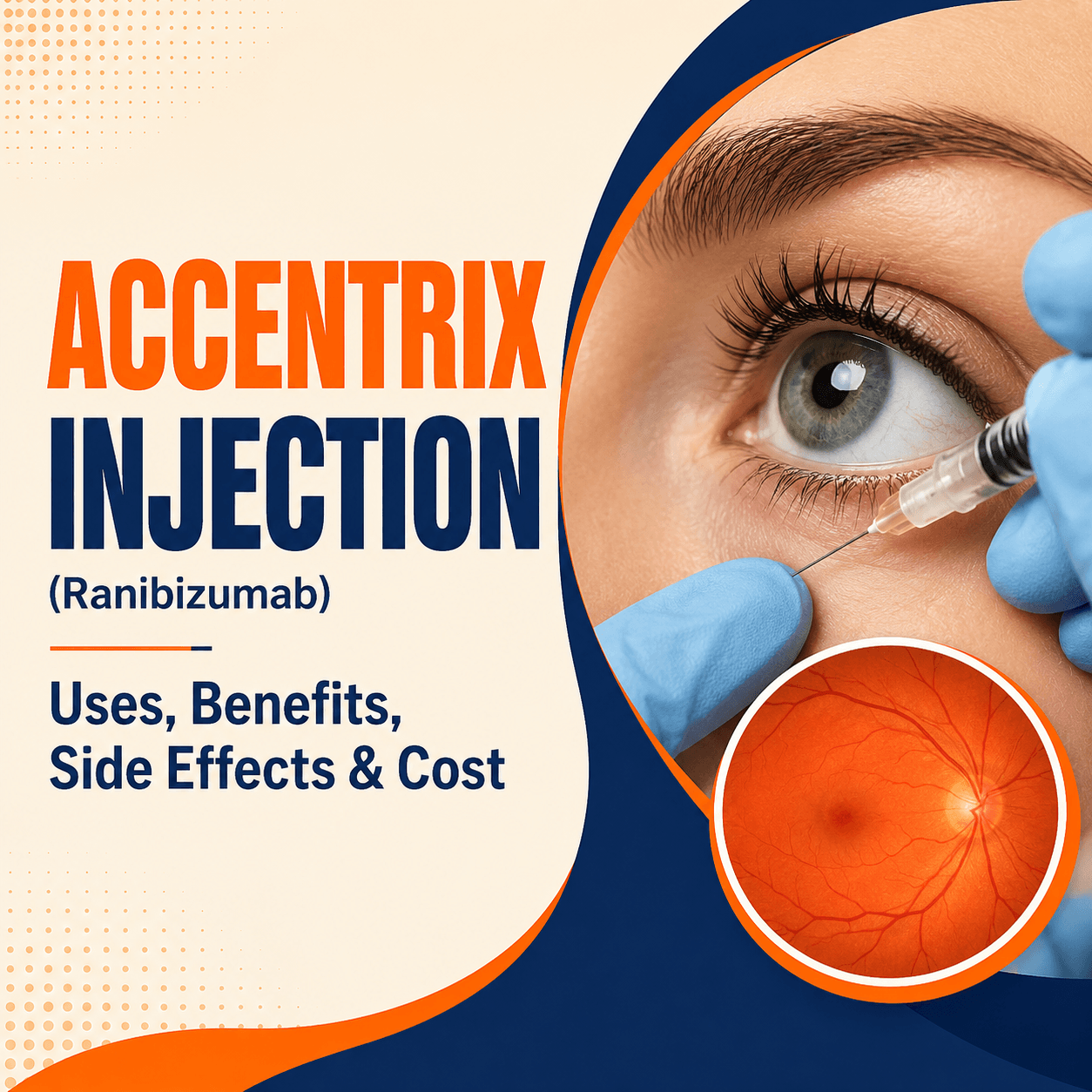
The standard treatment is anti-VEGF injection therapy. These medicines block the protein that drives abnormal blood vessel growth and leakage, allowing fluid to clear and the retina to settle.
The injection is given into the eye under local anaesthetic in a sterile setting. It takes seconds and is generally well tolerated, though the prospect alarms most patients far more than the reality warrants.
Treatment usually begins with a loading phase of monthly injections, after which the interval is adjusted according to how the eye responds. Some patients need injections every one to three months for years. This is ongoing treatment, not a course that finishes stopping when vision feels stable often allows the disease to reactivate.
The practical burden is real and worth planning for: repeat visits to a retina centre, scans at each visit, travel, cost, and usually a family member accompanying the patient. Discuss this openly at the outset.
Photodynamic therapy and laser
Older approaches are now used selectively rather than as first-line treatment. Photodynamic therapy uses a light-activated drug to close abnormal vessels and is occasionally used in specific situations. Retinal laser photocoagulation is rarely used for AMD today, since anti-VEGF gives better outcomes for most patients.
What Results Can You Realistically Expect?
Honest expectations help far more than optimistic ones.
For wet AMD, anti-VEGF treatment stabilises vision in most patients, and a minority experience meaningful improvement. Results are best when treatment starts early, before scarring develops. Some eyes respond less well, and your specialist may switch medicines if the response is inadequate.
For dry AMD, no current treatment improves vision. Supplements may slow progression in suitable patients, and the newer geographic atrophy medicines slow lesion growth without demonstrated vision benefit so far.
For both, vision already lost does not return. Damage to the macula is permanent, which is why the entire strategy is built around detecting change early and acting quickly.
How Macular Degeneration Is Diagnosed
Diagnosis is painless and usually straightforward:
- Vision testing, to measure current acuity
- Dilated retinal examination, to inspect the macula directly for drusen, pigment changes, fluid or bleeding
- OCT scan a quick, non-contact scan giving a detailed cross-section of the macula. This is central to diagnosing wet AMD and to monitoring response to treatment.
- OCT angiography or fluorescein angiography, where abnormal blood vessels need to be mapped
- Amsler grid testing, to document central distortion
A comprehensive eye examination that includes a dilated retinal check is the appropriate starting point for anyone over 60 noticing central vision changes.
Checking Your Vision at Home
This is the most useful thing you can do between appointments.
Use an Amsler grid a simple square grid with a central dot. Wearing your reading glasses, in good light, cover one eye, look steadily at the central dot, and note whether any lines appear wavy, broken, blurred or missing. Repeat with the other eye. Doing this daily, or as often as your doctor advises, helps you spot change early.
Testing each eye separately matters. A good eye will compensate for a deteriorating one, and people frequently discover significant loss only when they happen to cover the better eye.
Warning Signs That Need Urgent Attention
Contact your eye specialist promptly within days, not weeks — if you notice:
- Straight lines suddenly appearing bent, wavy or distorted
- A new dark, blurred or empty patch in your central vision
- A sudden drop in reading vision
- Colours appearing faded or objects looking different sizes between the two eyes
- Any sudden change in a patient with known dry AMD
Sudden distortion in someone with dry AMD may signal conversion to wet AMD, where treatment started early makes a substantial difference to the outcome.
Living Well With Macular Degeneration
A diagnosis is not the end of independent living. Practical support genuinely helps:
- Low-vision aids — magnifiers, high-powered reading glasses, electronic magnifiers
- Lighting — bright, well-directed task lighting makes a large difference for reading
- Technology — screen magnification, larger fonts, text-to-speech, audiobooks
- Contrast — dark objects on light surfaces, marked step edges at home
- Vision rehabilitation services, where available, to relearn daily tasks
Driving requires an honest conversation with your ophthalmologist, since central vision loss affects it directly. And because AMD tends to run in families, encourage siblings and children over 50 to have their retinas checked.
Depression is common after a diagnosis affecting reading and independence. It is worth mentioning to your doctor rather than treating it as an inevitable part of ageing.
Conclusion
The single most useful thing to know about macular degeneration treatment is that the two forms are managed completely differently. Wet AMD has effective treatment in anti-VEGF injections, and starting early strongly influences the result. Dry AMD has no vision-restoring treatment, so management centres on supplements where appropriate, lifestyle, and careful monitoring.
What links both is time. Vision lost to AMD does not return, so the entire strategy depends on noticing change early which is why home monitoring and keeping your appointments matter more than any single treatment decision.