



If you have been diagnosed with glaucoma, eye drops are almost certainly the first treatment you have been offered. They are effective, well established, and for most people they are the reason their vision stays stable for decades.
They are also easy to get wrong. Glaucoma causes no symptoms until late, the drops themselves can be irritating, and few patients are ever shown how to use them properly. This guide covers what each type does, what side effects to expect, and the practical technique that makes a genuine difference.
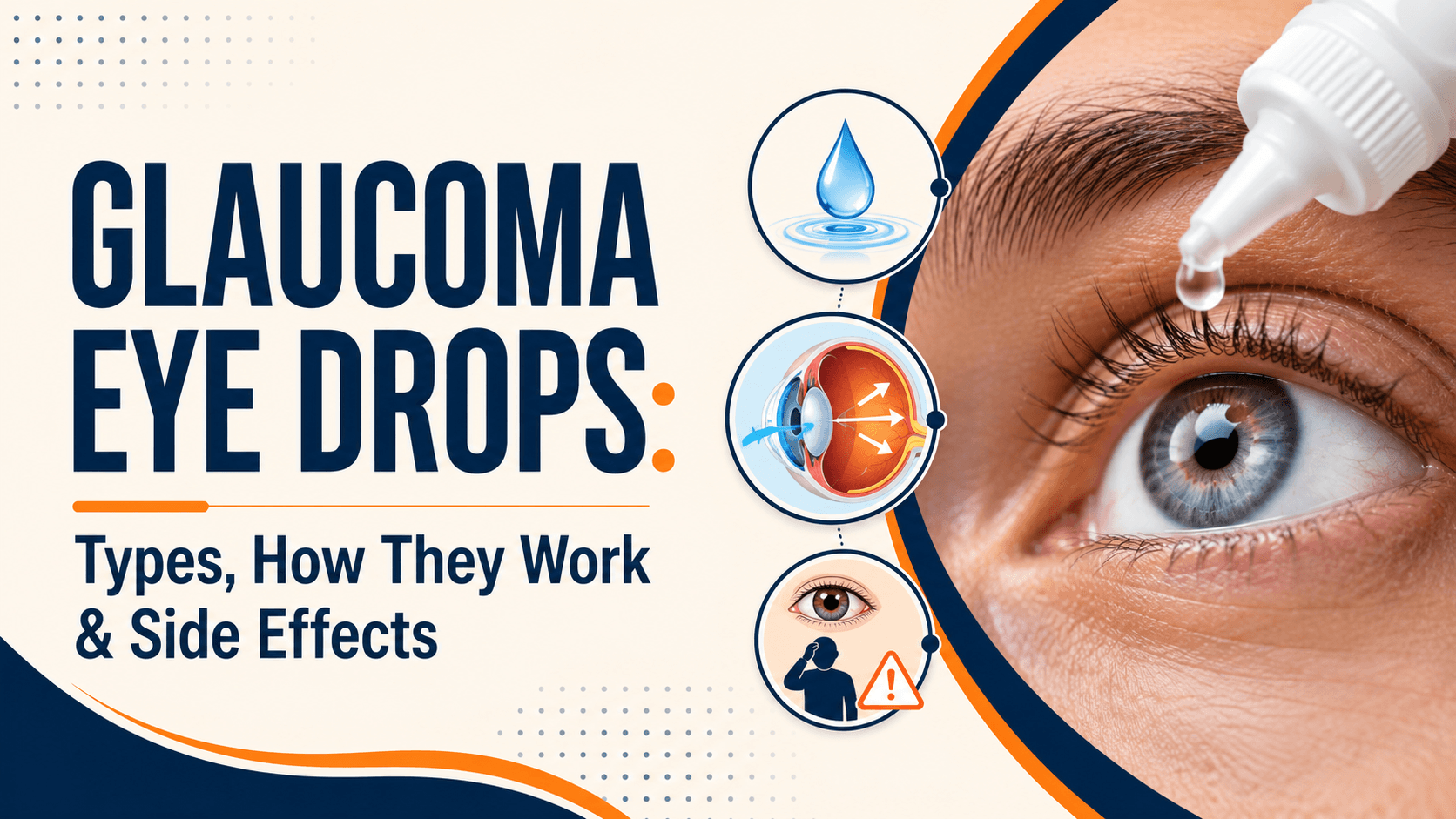
Key Takeaway: What Are Glaucoma Eye Drops?
Glaucoma eye drops are prescription medicines that lower the pressure inside the eye, either by reducing the fluid the eye produces or by helping that fluid drain away more easily. Lowering eye pressure is currently the only proven way to slow glaucoma and protect the optic nerve. The drops do not cure glaucoma or restore lost vision, and they usually need to be continued for life, which is why using them correctly and consistently matters as much as which drop you are given.
What Do Glaucoma Eye Drops Actually Do?
Your eye continuously produces a clear fluid called aqueous humour, which drains away through channels near the front of the eye. When drainage does not keep pace with production, pressure inside the eye rises. Over time, raised pressure can damage the optic nerve, and that damage is permanent.
Glaucoma eye drops work on one side of that balance or the other. Some reduce how much fluid the eye makes. Others improve how easily it drains. A few do both.
Two points are worth being clear about from the start. Lowering intraocular pressure is the only treatment approach proven to slow glaucoma. And because the disease is usually silent, you will not feel the drops working, which is precisely why people stop taking them.
The Main Types of Glaucoma Eye Drops
Your ophthalmologist selects a drop based on your eye pressure, the type and stage of your glaucoma, your general health, and how you tolerate it. Most people start on one drop, and some eventually need two or more.
|
Class |
How it works |
Usual dosing |
Main considerations |
|
Prostaglandin analogues |
Increase fluid drainage |
Once daily, usually at night |
Cosmetic changes around the eye and to iris colour |
|
Beta-blockers |
Reduce fluid production |
Once or twice daily |
Can affect heart and lungs; caution in asthma, COPD, heart conditions |
|
Alpha agonists |
Reduce production and increase drainage |
Two to three times daily |
Allergy is relatively common; drowsiness, dry mouth |
|
Carbonic anhydrase inhibitors |
Reduce fluid production |
Two to three times daily |
Stinging; oral form has more body-wide effects |
|
Rho kinase inhibitors |
Increase drainage |
Once daily |
Eye redness is common |
|
Combination drops |
Two medicines in one bottle |
Usually once or twice daily |
Fewer bottles; carries the effects of both drugs |
The generic names below are given so you can recognise what you have been prescribed. They are not recommendations; the choice of drop is a clinical decision for your doctor.
Prostaglandin analogues
Usually the first choice for open-angle glaucoma. They improve fluid outflow, work well, and need only one drop a day, typically at bedtime. Generic names include latanoprost, travoprost, bimatoprost and tafluprost.
Their distinctive side effects are cosmetic rather than dangerous: gradual darkening of the iris (most noticeable in hazel or mixed-colour eyes), longer and darker eyelashes, darkening of the eyelid skin, and over time a slight hollowing of the upper eyelid. Some of these changes can be long-lasting or permanent. Wiping away excess drop from the skin helps limit pigment changes around the eye.
Beta-blockers
One of the oldest and most widely used classes, reducing the amount of fluid the eye produces. Timolol is the most familiar example; betaxolol and levobunolol are others.
These drops deserve particular attention because they are absorbed into the bloodstream and can act on the heart and lungs. See the section on health conditions below; this is the most important safety point in this article.
Alpha agonists
Brimonidine is the common example. These both reduce fluid production and improve drainage, and are often added when a first drop is not enough.
Allergic reactions are relatively common with this class, sometimes appearing months after starting. Other effects include burning on instillation, dry mouth, fatigue and drowsiness. Brimonidine is generally avoided in infants and very young children.
Carbonic anhydrase inhibitors
Dorzolamide and brinzolamide are used as drops; acetazolamide is the tablet form, usually reserved for short-term use or high pressures. The drops commonly sting and can cause a bitter taste. The tablet form has more noticeable body-wide effects, including tingling in the hands and feet, fatigue, stomach upset and increased urination.
Rho kinase inhibitors
A newer class, netarsudil being the main example, which improves drainage through the eye’s natural outflow pathway. Eye redness is common, and some patients develop harmless deposits on the cornea or small bleeds on the white of the eye. Availability varies.
Combination drops
Where one drop is not enough, two medicines can be supplied in a single bottle, for example a prostaglandin with a beta-blocker, or a beta-blocker with either brimonidine or dorzolamide.
Combinations are genuinely useful: fewer bottles, fewer instillations, less preservative on the eye surface, and better adherence. They carry the side effects and precautions of both component drugs, so the beta-blocker cautions still apply.
Side Effects of Glaucoma Eye Drops
Most side effects are mild and manageable. Knowing what is expected, and what is not, helps you avoid stopping treatment unnecessarily.
Effects on the eye
- Stinging or burning on instillation
- Redness of the eye
- Blurred vision for a minute or two afterwards
- Itching, watering or a gritty feeling
- Dryness and irritation developing over months or years of use
- Darkening of the iris and eyelid skin, and longer eyelashes, with prostaglandins
- Allergic reactions, particularly with brimonidine
Effects on the rest of the body
Eye drops do not stay in the eye. Some of each drop drains into the nose and is absorbed into the bloodstream, which is why a small drop can occasionally produce body-wide effects.
- Beta-blockers can slow the heart rate, lower blood pressure, cause fatigue or breathlessness, and trigger wheezing in people with asthma or COPD. Effects on heart rhythm have been documented.
- Alpha agonists can cause drowsiness, dry mouth and low blood pressure.
- Carbonic anhydrase inhibitors in tablet form can cause tingling, fatigue and stomach upset.
If you develop wheezing, breathlessness, unusual tiredness, dizziness or a noticeably slow pulse after starting a new drop, contact your eye doctor promptly. Do not simply stop the drop without telling them.
Health Conditions Your Eye Doctor Must Know About
This is the most important practical section of this article.
Before you are prescribed glaucoma drops, tell your ophthalmologist if you have or have ever had:
- Asthma or COPD, or any breathing problem
- A slow heart rate, heart block, heart failure or any heart rhythm disorder
- Low blood pressure
- Diabetes, since beta-blockers can mask some warning signs of low blood sugar
- Kidney or liver problems
- Any drug allergy, including previous reactions to eye drops
- Pregnancy or breastfeeding
Also list every other medicine you take, including tablets for blood pressure or heart conditions, because these can interact with beta-blocker drops.
Non-selective beta-blocker drops such as timolol are generally avoided in asthma, significant COPD, symptomatic slow heart rate and certain heart block conditions. Alternatives exist in every one of these situations, so raising it simply means your doctor picks a different class.
If you are already using a beta-blocker drop and have a history of asthma or heart disease that you have not mentioned, raise it at your next appointment.
How to Put in Glaucoma Eye Drops Correctly
Technique genuinely changes how well the medicine works and how many side effects you get. Most patients are never shown this.
- Wash your hands and check the bottle label and expiry date.
- Tilt your head back and look up at the ceiling.
- Pull the lower eyelid down gently with one finger to create a small pocket.
- Squeeze one drop into that pocket. One drop is enough; the eye cannot hold more, and extra simply overflows and is wasted.
- Do not let the bottle tip touch your eye, eyelid, or lashes. This contaminates the bottle.
- Close your eyes gently. Do not squeeze them shut, and do not blink repeatedly, as both pump the drop away.
- Press the inner corner of your eye, beside the bridge of the nose, with a fingertip for one to two minutes.
- Wipe away any excess from the skin, particularly with prostaglandin drops.
- If you use more than one type of drop, wait at least five minutes between them, or the second drop will wash the first away.
Step 7 is called punctal occlusion, and it does two things at once. It keeps more of the medicine on the eye where it is needed, and it stops the drop draining into the nose and entering the bloodstream, which reduces body-wide side effects. For anyone on a beta-blocker drop, this one-minute habit is genuinely worth building.
Why Missing Doses Matters More Than You Think
Glaucoma is silent. Your vision feels the same whether your pressure is controlled or not, and the damage happens without any sensation. This is exactly why people stop.
Common reasons drops get skipped:
- The bottle finished, and the prescription was not refilled
- The drops sting, so doses get “postponed”
- Vision seems fine, so treatment feels unnecessary
- The regimen is complicated, with several bottles at different times
- Travel, illness or a change in routine disrupts the habit
- Cost, particularly with premium or preservative-free formulations
Missed doses allow pressure to rise, and any optic nerve damage that occurs cannot be reversed. If you are struggling with any of the above, the solution is a conversation with your ophthalmologist, not silent discontinuation. Simplifying to a combination drop, switching class, or moving to a laser option may all be possible.
Practical habits that help: link drops to an existing daily routine such as brushing your teeth, set a phone alarm, keep a spare bottle where you spend time, and mark refill dates in a calendar. If you care for an elderly relative, supervise instillation rather than assuming it is happening; arthritis, tremor, and poor vision all make self-instillation harder than it looks.
Common Practical Problems and How to Solve Them
- “I can’t tell if the drop went in.” use the lie-down method: close your eyes, place the drop in the inner corner, then open.
- “My hands shake.” Rest your hand against your forehead to steady it, or ask about drop-aid devices.
- “It stings every time.” Tell your doctor. A preservative-free version or a different class may suit you better.
- “I’m not sure if I already took it.” Turn the bottle upside down in its box after each dose, or use a pill organiser box for bottles.
- “I ran out while travelling.” Always carry the prescription and a spare bottle, and never share drops with anyone else.
Preservatives and Long-Term Comfort
Most multi-dose eye drops contain a preservative to keep the bottle sterile. Over years of daily use, preservatives, such as benzalkonium chloride in particular, can irritate the ocular surface and contribute to dry eye, redness and discomfort.
This matters because surface irritation is a leading reason people abandon treatment. If your drops have become steadily less comfortable over time, that is worth reporting rather than tolerating. Preservative-free formulations exist for several glaucoma medicines, and reducing the number of separate bottles also reduces total preservative exposure.
When Eye Drops Are Not Enough
Drops are the usual starting point, but they are not the only option. If pressure remains above target, if side effects are intolerable, or if using drops consistently is not realistic, your ophthalmologist may discuss:
- Laser trabeculoplasty, an outpatient laser procedure that improves drainage and can reduce or delay the need for drops
- Minimally invasive glaucoma surgery, often combined with cataract surgery in suitable patients
- Trabeculectomy or drainage implant surgery, for more advanced or poorly controlled glaucoma
None of these cures glaucoma either. Like drops, they lower pressure to protect the vision you still have.
When to Contact Your Eye Doctor
Get in touch promptly if you experience:
- Wheezing, breathlessness, dizziness, unusual fatigue or a slow pulse after starting a drop
- Severe or persistent eye redness, pain, swelling of the eyelids, or a rash
- Sudden blurring or loss of vision
- Severe eye pain with headache, nausea or halos around lights, which needs emergency care
- A drop you cannot tolerate, or a regimen you cannot keep up with
- Any missed appointment for pressure and optic nerve monitoring
Because glaucoma progresses without symptoms, regular monitoring is part of treatment rather than an optional extra. Understanding the early signs of glaucoma also helps you encourage family members to get screened, since the condition often runs in families.
Conclusion
Glaucoma eye drops do one thing well: they lower eye pressure, which is currently the only proven way to slow the disease. They will not make your vision better, and you will not feel them working, but they are the reason most people diagnosed early keep useful sight for life.
Three things make the most difference. Use the right technique, including closing your eyes and pressing the inner corner for a minute or two. Tell your doctor about any breathing or heart condition before starting, particularly if a beta-blocker drop is being considered. And keep going, including on the days when your eyes feel completely normal.