



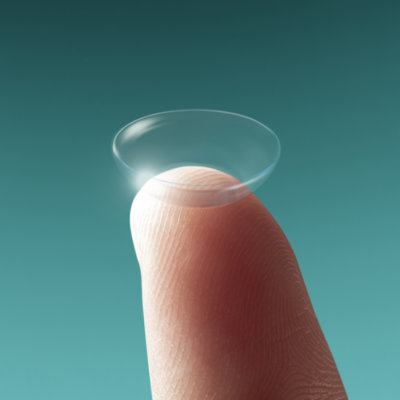
Intraocular lenses, commonly called IOLs, are artificial lenses implanted during cataract surgery or refractive lens exchange. They replace the eye’s natural, clouded lens and help correct vision problems such as myopia, hyperopia, presbyopia, and astigmatism. Modern IOLs are permanent and can significantly reduce dependence on glasses.
Choosing among the types of IOL lenses available in 2026 depends on vision goals, lifestyle needs, eye health, and budget. This guide explains the different types of IOL, their features, benefits, limitations, and costs to help patients make informed decisions.
Overview: What Are Intraocular Lenses?
How IOLs Work
IOLs are clear artificial lenses implanted inside the eye after the natural lens is removed. They focus incoming light onto the retina, enabling clear vision much like a healthy natural lens.
Since their introduction in the mid-20th century, IOLs have evolved considerably. Today’s lenses are made from advanced materials such as hydrophobic or hydrophilic acrylic, silicone and collamer. These foldable materials allow small-incision surgery, faster healing, and stable long-term results.
Why IOL Choice Matters
The choice among the different types of IOL lenses directly affects visual range, contrast sensitivity, night-time vision, and overall satisfaction after surgery. Some lenses prioritise clarity at a single distance, while others aim for spectacle independence across multiple distances. Not all IOLs are covered by insurance, and premium lenses may involve additional out-of-pocket costs, making careful selection essential.
Types of IOLs and Their Features
Several types of IOL lenses are routinely used in 2026. Each serves different visual needs.
Monofocal IOLs: Clear Vision at One Distance
Monofocal lenses provide a single focusing power, usually set for distance vision. Most patients need reading glasses for near tasks.
- Benefits: Predictable outcomes, high image quality, fewer visual disturbances and the lowest cost. These lenses are commonly covered by insurance.
- Drawbacks: No correction for near or intermediate vision unless monovision is used, which requires adaptation.
- Cost: Typically, the most affordable option.
- Ideal for: Patients who prioritise night driving clarity and are comfortable wearing glasses for reading.
Multifocal and Trifocal IOLs – Multiple Focal Zones
Multifocal lenses split light into different focal zones, while trifocal lenses add an intermediate focal point.
- Benefits: Reduced dependence on glasses for near, intermediate and distance vision.
- Drawbacks: Possible halos, glare, and reduced contrast sensitivity, particularly at night. Adaptation is required, and these are premium lenses.
- Cost: Higher than monofocal lenses and usually not insured.
- Ideal for: Patients prioritising spectacle independence.
Extended Depth of Focus (EDOF) IOLs – Continuous Range Of Vision
EDOF lenses create an elongated focal zone rather than multiple distinct points.
- Benefits: Smooth distance-to-intermediate vision with fewer halos compared to multifocals.
- Drawbacks: Near vision may still require reading glasses.
- Ideal for: Computer users and those sensitive to night-time visual disturbances.
Accommodating IOLs – Dynamic Focusing
These lenses are designed to shift or flex slightly in response to eye muscle movement.
- Benefits: More natural transitions between distances and minimal halos.
- Drawbacks: Near vision improvement may be limited, and outcomes vary.
- Ideal for: Active individuals seeking functional range without multifocal optics.
Toric IOLs – Correcting Astigmatism
Toric lenses correct corneal astigmatism and are available across monofocal, multifocal and EDOF designs.
- Benefits: Sharper vision and reduced reliance on glasses for patients with astigmatism.
- Drawbacks: Require precise alignment and involve higher costs.
- Ideal for: Patients with moderate to high astigmatism.
Aspheric IOLs – Reducing Optical Distortions
Aspheric lenses reduce spherical aberrations.
- Benefits: Better contrast and clarity, especially in low-light conditions.
- Drawbacks: Slightly higher cost than standard monofocals.
- Ideal for: Night drivers and patients sensitive to glare.
Light Adjustable IOLs (LALs) – Customisable Vision
LALs are composed of photosensitive material that can be reshaped after surgery using ultraviolet (UV) light.
- Benefits: Allows for precise, personalised vision correction after the eye has healed.
- Drawbacks: Requires wearing UV-blocking glasses until “lock-in”; higher cost and more follow-up visits.
- Ideal for: Patients seeking “custom-tuned” vision and those with previous refractive surgeries.
Phakic Lenses and Emerging Technologies
Phakic lenses are implanted without removing the natural lens, mainly for younger patients with high refractive errors. Emerging innovations in 2026 include enhanced trifocals, wavefront-guided optics and toric EDOF designs aimed at improving contrast and reducing side effects.
IOL Materials and Quality
Materials influence flexibility, clarity and long-term performance. Hydrophobic acrylic lenses are widely used due to stability and lower rates of posterior capsular opacification. Material choice is an important part of selecting among the different types of IOL.
Benefits and Drawbacks of Each IOL Type
1. Monofocal IOLs
- Benefits:
- Sharpest distance vision
- Cleanest night vision (no halos)
- Lowest cost (often 100% insured)
- Drawbacks:
- No near or intermediate focus
- Permanent dependence on reading glasses
2. Multifocal & Trifocal IOLs
- Benefits:
- Clear vision at all three ranges (near, mid, far)
- Highest chance of never needing glasses
- Drawbacks:
- Risk of night-time halos/glare
- Reduced contrast in dim light
- High out-of-pocket cost
3. Extended Depth of Focus (EDOF) IOLs
- Benefits:
- Seamless distance-to-computer vision
- Significantly fewer halos than multifocals
- Drawbacks:
- May still require reading glasses for very fine print
- Higher cost than monofocals
4. Accommodating IOLs
- Benefits:
- Naturally shifts focus using the eye muscles
- No “rings” in your vision
- Low glare risk.
- Drawbacks:
- Near vision strength can vary by patient
- Effectiveness may decrease slightly over time
5. Toric IOLs (Astigmatism)
- Benefits:
- Specifically corrects astigmatism
- Eliminates the “ghosting” or blur typical of football-shaped eyes
- Drawbacks:
- Requires precise surgical alignment
- Incurs a premium fee
- Vision blurs if the lens rotates
6. Light Adjustable Lenses (LAL)
- Benefits:
- Vision is fine-tuned after surgery via UV light
- Eliminates “refractive surprise” for perfect accuracy
- Drawbacks:
- Requires multiple follow-up visits
- Must wear UV-protective glasses 24/7 during the adjustment period
7. Aspheric IOLs
- Benefits:
- Advanced shape reduces optical distortions
- Superior contrast sensitivity in low light
- Drawbacks:
- Slightly more expensive than basic spherical monofocals
Factors to Consider When Choosing an IOL
Vision Goals and Lifestyle Needs
Reading habits, screen use, driving at night and sports participation all influence IOL choice. Those who drive frequently at night may prefer monofocal or aspheric lenses, while avid readers may opt for multifocal designs.
Eye Health Considerations
Conditions such as glaucoma, macular degeneration or severe dry eye may limit suitability for multifocal or EDOF lenses. Astigmatism requires toric correction.
Cost and Insurance Coverage
Insurance generally covers monofocal lenses. Premium options involve additional costs that vary by region and provider.
Post-Surgery Adaptation and Side Effects
Some lenses require neural adaptation. Understanding potential halos, glare, or residual spectacle needs helps set realistic expectations.
Costs of IOLs in 2026
In 2026, monofocal IOLs are usually included within standard cataract surgery packages and covered by insurance. Premium IOLs involve additional out-of-pocket costs, which vary by lens type, surgeon expertise, hospital charges, and follow-up care requirements.
Conclusion
There is no universal “best” lens among the different types of IOL lenses. The optimal choice depends on individual vision goals, eye health, lifestyle, and budget. Advances in 2026 provide more tailored options than ever. A detailed consultation with an ophthalmologist remains essential to achieving safe, satisfying outcomes.