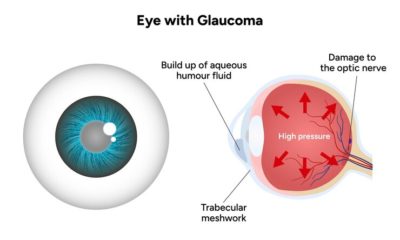




Glaucoma refers to a group of eye diseases that damage the optic nerve, often due to raised intraocular pressure. While anyone can develop glaucoma, genetics play an important role. Having relatives with the disease increases your likelihood of developing it, and certain genetic mutations can directly affect the eye’s drainage pathways, leading to higher pressure.
It is important to distinguish between a family history of glaucoma and hereditary glaucoma. A family history means relatives have been diagnosed with the disease. Hereditary glaucoma refers to specific genetic mutations that are passed from parents to children, influencing the structure and function of the eye.

What Does Hereditary Glaucoma Mean?
When patients ask, “Is glaucoma a hereditary disease?”, the explanation lies in genetics. In hereditary glaucoma, genes that regulate fluid drainage are altered. These changes can disrupt the trabecular meshwork or the angle structures, leading to an increase in intraocular pressure.
Some people inherit mutations directly linked to glaucoma, while others inherit structural traits that increase susceptibility, such as narrow drainage angles or weaker optic nerves. In both situations, genetics contribute significantly to risk.
Types of Glaucoma Linked to Genetics
Genetics affect several forms of glaucoma. These include conditions strongly influenced by inheritance as well as those with partial genetic involvement.
Primary Open Angle Glaucoma (POAG)
POAG is the most common form, accounting for up to 90% of cases. Around half of all patients have a family history, and having a first-degree relative raises the risk nearly nine times. The condition is more common among African and Latino populations.
Congenital and Juvenile Glaucoma
Early-onset glaucoma is rare but strongly hereditary. It may follow autosomal dominant or recessive inheritance. Key genes include CYP1B1, LTBP2, PITX2, FOXC1, PAX6, LMX1B, MYOC, OPTN and TBK1. Incidence varies from 1 in 2,500 to 1 in 20,000 births.
Angle Closure and Pigmentary Glaucoma
Primary angle closure glaucoma involves the iris blocking the drainage angle. It is more common in Asian populations and may run in families.
Pigmentary glaucoma develops when pigment blocks drainage and may have a hereditary component. Patients often ask whether “is narrow-angle glaucoma hereditary?”, and the answer is yes, structural traits can be inherited.
How Genetics Influence Your Risk of Glaucoma
Family History and Heritability
Up to half of all glaucoma cases have a genetic component. If a parent, sibling or child has glaucoma, your risk increases significantly.
Siblings of glaucoma patients face nearly ten times higher risk. Although glaucoma may appear to skip generations, any blood relative with the disease increases your likelihood.
Genetic Mutations and Early-Onset Glaucoma
Mutations in genes such as MYOC or CYP1B1 are strongly associated with early-onset glaucoma. Early-onset glaucoma usually follows a clear inheritance pattern, while adult-onset glaucoma involves interactions between genes and environmental triggers.
Ethnicity, Age and Other Risk Factors
Ethnicity plays a major role. African, Latino and Scandinavian populations have a higher risk of POAG, while Asian and Native Alaskan groups have a greater risk of angle closure glaucoma.
Risk increases with age, especially beyond 60. Other factors include eye injuries, inflammation, tumours, migraines, diabetes, heart disease and long-term steroid use.
Recognising Hereditary Glaucoma: Symptoms and Diagnosis
Symptoms
Hereditary glaucoma often develops silently. Most patients notice no symptoms until significant optic nerve damage has occurred. Subtle signs include raised eye pressure and gradual loss of peripheral vision.
Diagnosis
Early and regular screening is essential for people with a family history. Diagnosis involves:
- Intraocular pressure checks
- Optic nerve evaluation
- Visual field testing
- Optical coherence tomography (OCT)
Genetic Testing for Glaucoma
Genetic testing may help identify high-risk mutations, particularly in congenital or juvenile glaucoma. It is not routinely required for adult-onset glaucoma, but research continues to identify additional gene variants.
Can Hereditary Glaucoma Be Prevented or Managed?
Importance of Regular Eye Exams and Early Intervention
Although glaucoma cannot be cured, early detection prevents significant vision loss. Treatment focuses on lowering eye pressure through medication, laser therapy or surgery. People with a family history should begin screening earlier than the general population.
Lifestyle and Health Management
Managing diabetes, high blood pressure and cholesterol helps lower overall risk. Regular exercise, avoiding smoking and protecting the eyes from injury support eye health. These strategies are particularly important for individuals with a genetic predisposition.
Emerging Research on Gene-Based Therapies
Scientists are exploring gene-based therapies and neuroprotective treatments. Techniques such as gene editing aim to target faulty genes, though these remain experimental.
What to Do If Glaucoma Runs in Your Family
If you wonder, “family history of glaucoma, what to do?”, the first step is gathering information. Ask relatives about their diagnosis, age at detection and treatment history.
Maintain records for your doctor. Encourage family members to undergo screening and ensure you inform your eye specialist of any relatives with glaucoma.
Conclusion: Know Your Genetic Risk and Protect Your Vision
Genetics play an important role in glaucoma, but both hereditary and environmental factors influence the disease. Having a family history increases risk, but it does not guarantee disease.
Regular screening, early treatment and healthy habits are the most effective ways to protect the optic nerve. Ongoing research continues to uncover genetic patterns that may improve future diagnostic and treatment options.