



Most of us use the phrase “perfect vision” quite casually. In clinical terms, however, that state has a name: emmetropia. It refers to naturally clear eyesight without the need for glasses or contact lenses.
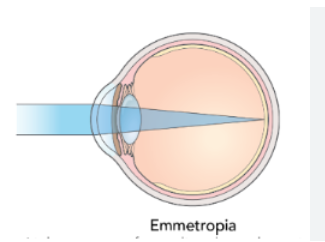
When someone has emmetropia, the eye’s shape and its focusing power are properly balanced, allowing light to fall exactly where it should: on the retina. When the eye is emmetropic, light focuses exactly on the retina when you’re relaxed.
This gives you clear, comfortable distance vision without needing to squint. However, even if you see well, it’s still important to care for your eyes because good vision doesn’t guarantee eye health.
Understanding Emmetropia: Definition and Meaning
So, what is emmetropia? It is the eye’s normal refractive state. An emmetropic eye typically produces 20/20 vision without corrective lenses. There is no need to squint your eyes to read a road sign or struggle to see clearly across a room.
How Light Focuses in an Emmetropic Eye
For emmetropia to occur, the eye must be the correct length from front to back. At the same time, the cornea and lens must bend light with just the right amount of power. When these parts are in proportion, light lands squarely on the retina.
If the eye is too long, light focuses in front of the retina, causing myopia. If it’s too short, light focuses behind the retina, leading to hyperopia. Emmetropia is the balance between these, where the eye’s shape allows for clear vision.
Why Emmetropia Is Viewed as the Ideal Vision State
Emmetropia is called the ideal state of vision because it means the eyes can see things without any help. With no refractive error, you can see clearly at a distance without help. Some people with emmetropia even see better than 20/20.
Emmetropia vs. Ametropia: Key Differences
Ametropia means there’s a refractive error in the eye. The main types are myopia, hyperopia, and astigmatism. Myopia makes distant things look blurry. Hyperopia can make it hard to see up close. Astigmatism happens when the cornea isn’t shaped evenly, causing vision to look distorted.
Presbyopia is a bit different. As one ages, the lens in the eye starts becoming less flexible, making it tough to focus on things up close. Even people who always had emmetropia can develop presbyopia.
Causes and Symptoms of Refractive Errors
Refractive errors happen when the eye is too long, too short, or shaped unevenly. This means light doesn’t focus properly on the retina.
Common symptoms are blurry vision, eye strain, headaches, and glare around lights. People with emmetropia usually don’t have these problems because their eyes focus naturally.
Emmetropia vs. Ametropia: Why It Matters
The distinction between emmetropia and ametropia has everyday consequences. Individuals with emmetropia can see sharply without spectacles or contact lenses. Those with ametropia usually require correction through glasses, contact lenses or refractive surgery.
Refractive errors are common and highly treatable. Emmetropia treatment, strictly speaking, is not required because there is no refractive problem to correct.
How Emmetropia Occurs: Anatomy and Contributing Factors
Emmetropia develops when the length of the eyeball and the optical strength of the cornea and lens are balanced. The cornea performs most of the eye’s focusing work, while the lens fine-tunes the image.
When the cornea and lens focus light to match the eye’s length, light hits the retina just right. This balance gives you a clear vision.
Influencing Factors
Ongoing research investigates the causes of emmetropia and why some individuals develop emmetropia while others do not. Genetic factors influence ocular growth and structure, while environmental aspects, such as time spent outdoors and visual habits during childhood, may also contribute.
There’s evidence that the brain’s response to what we see as we grow helps control how the eye develops. This process is complex and not fully understood yet.
How Common is Emmetropia?
Emmetropia is fairly common and can be found in over half the population at some ages. How common it is depends on where you live, your lifestyle, and your age. In many places, emmetropia is still more common than any single vision problem, but this can change over time.
Emmetropia and Presbyopia: Age-Related Changes
Even those with long-standing emmetropia will notice changes with age. Presbyopia develops as the natural lens becomes less flexible, reducing the eye’s ability to focus on near objects.
This change is unrelated to the eye’s length or corneal shape. Someone may retain emmetropia for distance vision yet have difficulty reading small print.
Treatment Options for Presbyopia
Presbyopia is usually managed with reading glasses, bifocals or multifocal lenses. Some surgical approaches are available in selected cases.
It is important to recognise that presbyopia does not cancel out emmetropia. A person can remain emmetropic for distance vision while needing assistance for close work.
Caring for Emmetropic Eyes
Protective Measures: UV Protection, Diet and Lifestyle
Maintaining emmetropia is less about emmetropia treatment and more about preservation. Here are some of the measures you can take:
- Wear sunglasses that provide full UV protection
- Eating a well-balanced diet rich in leafy vegetables and colourful fruits
- Aim to maintain a healthy weight and manage medical conditions such as diabetes
- Avoid smoking, which exacerbates the risk of serious eye disease
- Use appropriate eye protection when playing sports or working in hazardous environments
- When using screens, remember to blink regularly and follow the 20-20-20 rule
- Ensure you are in good lighting areas as it reduces unnecessary strain
- Keeping hydrated also supports the stability and comfort of the tear film
When To See An Eye Doctor
Seek professional advice if you experience sudden changes in vision, persistent discomfort, flashing lights, new floaters or eye injury. Even if you have always had emmetropia, vision can alter over time. Early assessment makes a difference.
Conclusion
Emmetropia is a state where the eye’s structure and focusing power are in balance, giving you clear vision without visual aids. Even with ideal vision, you still need to care for your eyes. Regular eye exams, UV protection, and healthy habits help keep your eyes healthy for the long term. Value your natural sight and take steps to protect it.