



Timolol has been used to treat glaucoma for over four decades and remains one of the most widely prescribed eye drops in India.
It is effective, inexpensive and well established. It is also a beta-blocker, the same class of drug used for heart conditions, and that changes what you need to know about using it.
Key Takeaway
Timolol eye drops lower pressure inside the eye by reducing the amount of fluid the eye produces. They are used in glaucoma and ocular hypertension. Because a large share of any eye drop drains into the bloodstream, timolol can affect the heart and lungs. It must not be used by people with asthma or certain heart conditions, and everyone using it should learn to press the inner corner of the eye after each drop.
What Are Timolol Eye Drops?
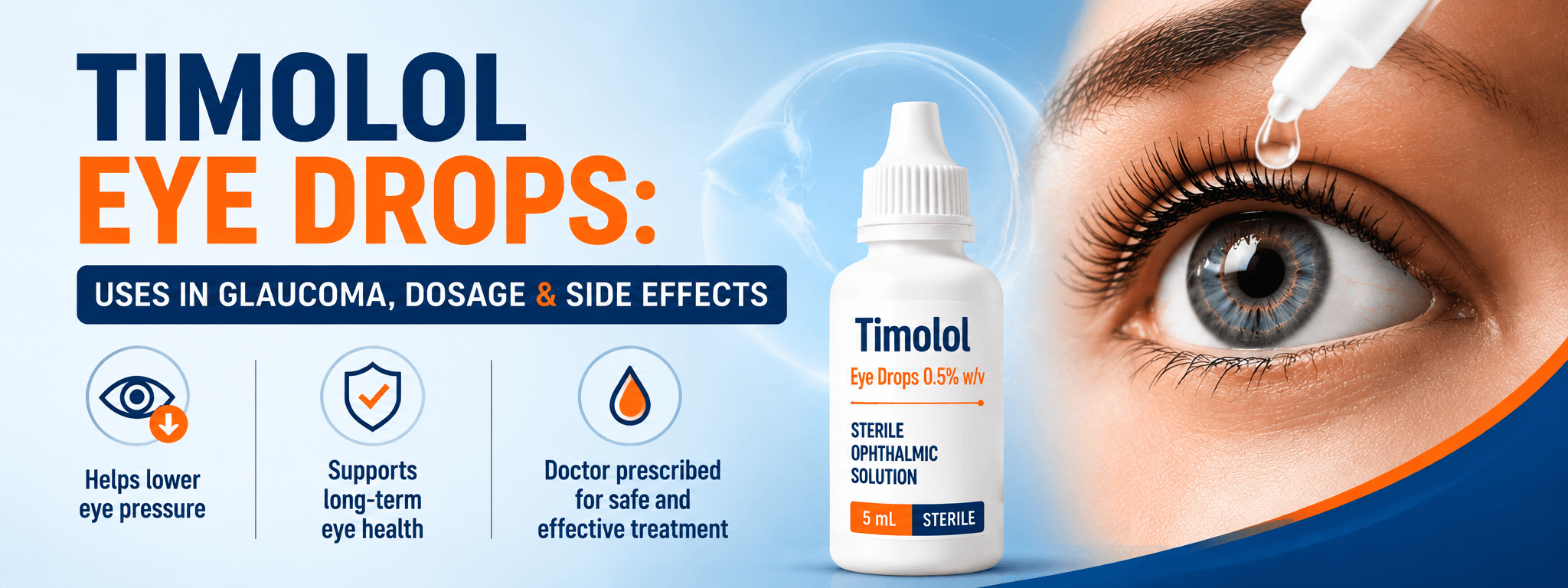
Timolol is a non-selective beta-blocker supplied as a sterile eye drop. It is prescription-only and is used to lower intraocular pressure, the pressure inside the eyeball.
It is prescribed for:
- Open-angle glaucoma, the commonest form
- Ocular hypertension, where eye pressure is raised but no damage has yet occurred
- Other forms of glaucoma, as part of a wider treatment plan decided by your ophthalmologist
In angle-closure glaucoma it is not used alone, because the immediate priority there is reopening the drainage angle.
How Timolol Lowers Eye Pressure
Your eye continuously makes a clear fluid called aqueous humour, which nourishes the internal structures and then drains away. Pressure inside the eye reflects the balance between how much is produced and how much drains out.
When pressure stays too high, it damages the optic nerve, the cable carrying vision from the eye to the brain.
Timolol works on the production side. It reduces the amount of fluid the ciliary tissue makes, so less enters the eye and pressure falls.
It does not repair damage already done. It prevents further damage.
Why You Keep Using Drops for an Eye That Feels Fine
This is the hardest part of glaucoma treatment, and it deserves stating plainly.
Glaucoma causes no symptoms until it is advanced. There is no pain, no redness, and no blurring in the early and middle stages. Vision is lost from the periphery first, so gradually that the brain fills in the gap. Most people notice nothing until a significant amount is gone.
The damage cannot be reversed. Optic nerve fibres that die do not grow back. Treatment protects what remains.
The drops do not make you feel better; they were never going to. Their entire job is to prevent a loss you would otherwise not notice happening.
This combination is why glaucoma drops are among the most frequently abandoned medicines in the world. People feel fine, the bottle runs out, and nothing seems to change for months.
If you take one thing from this article: continue the drops, keep your review appointments, and if cost, side effects or the routine are making it difficult, say so. There are alternatives. Silently stopping is the one option with no upside.
An Eye Drop That Reaches the Rest of Your Body
Most people assume an eye drop stays in the eye. For timolol, that assumption is the source of nearly every avoidable problem.
Roughly 80% of a drop drains out of the eye through the tear duct, into the nose and throat, where the lining absorbs it quickly into the bloodstream. Published pharmacology indicates that the systemic exposure from timolol eye drops is comparable to taking the drug by mouth.
That is why a drop applied to the eye can slow the heart or tighten the airways in someone susceptible.
Serious cardiac and respiratory reactions to ophthalmic timolol have been reported in the medical literature, particularly in people with pre-existing heart or lung disease. This is not a reason for alarm if you have been properly assessed; it is the reason the contraindications below exist, and the reason the two-minute technique described later genuinely matters.
Who Should Not Use Timolol Eye Drops
Timolol is contraindicated, meaning it should not be used at all in people with:
- Asthma, or any past history of asthma
- Severe chronic obstructive pulmonary disease (COPD)
- A slow heart rate (sinus bradycardia)
- Second- or third-degree heart block
- Overt heart failure
- Cardiogenic shock
- Known allergy to timolol or any ingredient in the product
Tell your ophthalmologist before starting if you have, or have ever had:
- Breathing problems of any kind, including childhood asthma
- Any heart condition, or a pacemaker
- Low blood pressure, or episodes of fainting
- Diabetes: beta-blockers can mask the warning signs of low blood sugar, which matters if you also have diabetic eye disease and are on treatment for diabetes
- An overactive thyroid, since beta-blockers can mask its symptoms
- Myasthenia gravis
- Any oral beta-blocker such as metoprolol, atenolol or bisoprolol; the effects add up
None of these automatically rules out treatment, apart from the absolute contraindications listed first. They are reasons for your doctor to choose differently or monitor you more closely. What matters is that they know before writing the prescription, not after.
If you have asthma and have been prescribed timolol, do not simply start it go back and confirm. Other classes of glaucoma drop are available.
Dosage and Formulations
Use exactly the schedule your ophthalmologist has given you. Glaucoma regimens are individual and often change over time.
Timolol comes in two strengths, 0.25% and 0.5%, and in two forms:
|
Form |
Typical use |
Practical notes |
|
Standard solution |
Usually one drop once or twice daily, as prescribed |
Thin and watery; drains away faster |
|
Gel-forming solution |
Usually once daily |
Thickens on contact with the eye; less drains into the body, and it blurs vision briefly |
The gel-forming version is often preferred where systemic absorption is a particular concern, because less of it escapes down the tear duct.
On duration: glaucoma treatment is usually lifelong. This is not a course you finish. Your prescription may change as your pressure is monitored, but treatment continues.
If you miss a dose, use it as soon as you remember unless the next one is nearly due, in which case skip it. Do not double up.
Never stop on your own. Eye pressure rises again within days, and if you are also on oral beta-blockers, there are additional reasons not to stop abruptly. If something about the drops is not working for you, that is a conversation, not a decision to make alone.
How to Use Timolol Eye Drops Correctly
- Wash and dry your hands.
- Remove contact lenses. Many preserved drops are unsuitable with lenses in; wait about 15 minutes before reinserting.
- Tilt your head back and look up.
- Pull the lower eyelid down gently to form a small pocket.
- Squeeze in one drop. Do not let the nozzle touch your eye, lashes or fingers.
- Close the eye gently; do not squeeze or blink hard, which pumps the drop straight into the tear duct.
- Press on the inner corner of the eye for one to two minutes. See below.
- Leave at least five minutes between different eye drops, and apply ointments last.
If you use several glaucoma drops, ask your clinic to write the order and timing on a card. Complex regimens are a common reason doses get missed.
Punctal Occlusion: The Two Minutes That Matter Most
This is the single most useful practical technique on this page, and most patients have never been shown it.
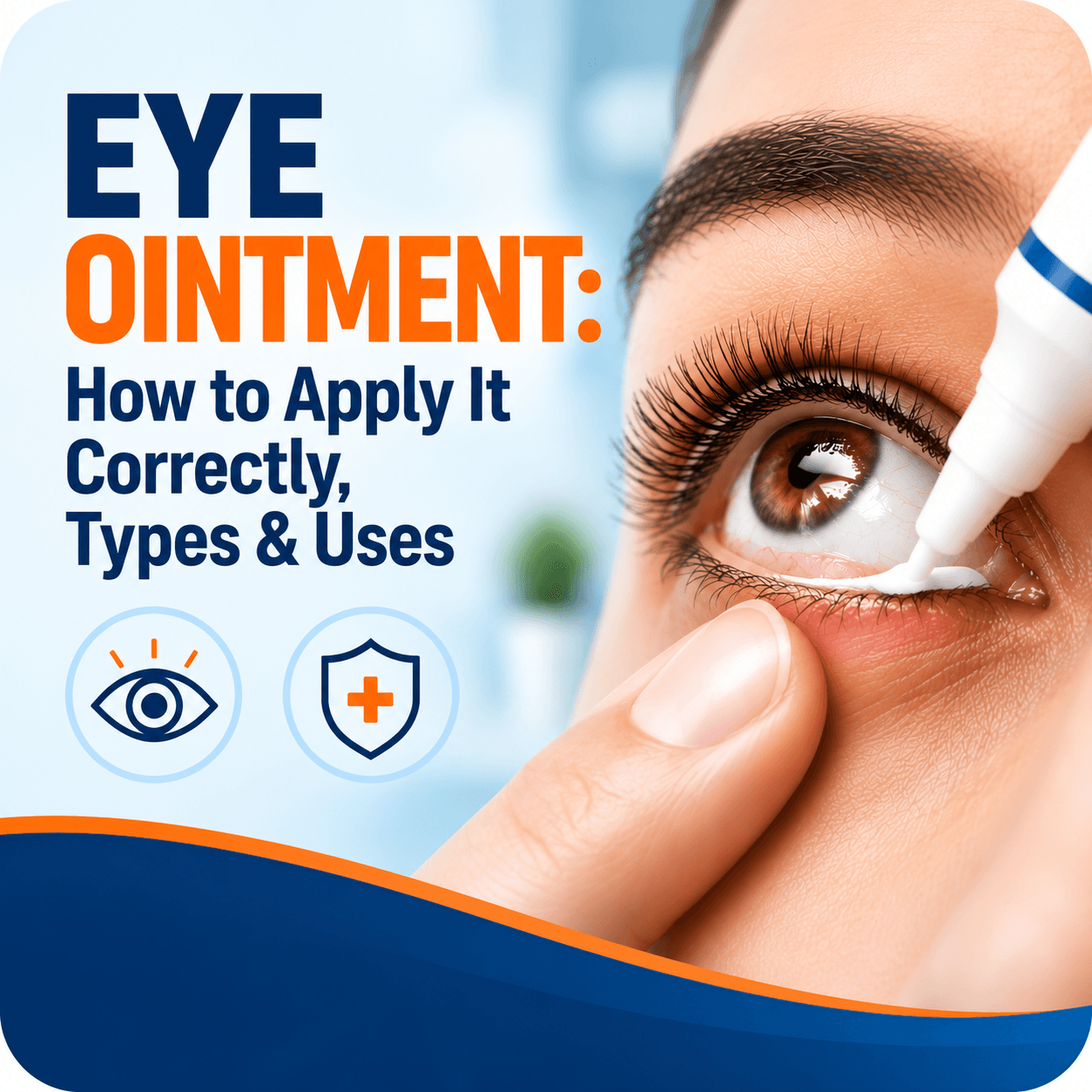
After instilling the drop, close your eye and press gently with a fingertip on the inner corner, beside the nose, for one to two minutes.
That spot is where the tear drainage channels begin. Blocking them briefly does two things at once:
- Less drug drains into your bloodstream, reducing the risk of effects on the heart and lungs
- More drug stays on the eye, so the drop works better where it is meant to
The American Academy of Ophthalmology specifically recommends punctal occlusion to minimise systemic absorption with beta-blocker eye drops. It costs nothing and takes two minutes.
If you find it awkward, gently closing your eyes and keeping them closed for two minutes without blinking achieves part of the same effect.
Side Effects of Timolol Eye Drops
In the eye, commonly reported and usually mild:
- Stinging or burning as the drop goes in
- Blurred vision briefly, particularly with the gel form
- Dryness, grittiness or watering long-term use of preserved drops can contribute to dry eye
- Redness or itching of the eyelids
- Reduced corneal sensation
Elsewhere in the body, from the absorbed portion:
- Slowing of the heart rate
- Tiredness, lethargy or reduced exercise tolerance
- Dizziness or light-headedness, particularly on standing
- Cold hands and feet
- Low mood, sleep disturbance or vivid dreams
- Reduced sexual function
These systemic effects are easy to miss, because patients do not connect a symptom in the body with a drop in the eye and often mention them to a physician who does not know they are using glaucoma drops. If you have felt more tired, slower or more breathless since starting timolol, raise it specifically.
When to Seek Urgent Medical Help
Seek immediate medical attention for:
- Wheezing, chest tightness, or difficulty breathing; this can be serious and needs emergency care
- A very slow pulse, fainting, or near-fainting
- Swelling of the ankles, sudden weight gain, or breathlessness when lying flat are possible signs of heart strain
- Severe dizziness or collapse
Contact your eye doctor promptly for eye pain, sudden reduction in vision, seeing haloes around lights, or a red, painful eye these can indicate a rise in eye pressure or another problem needing assessment.
You May Be Using Timolol Without Realising It
Timolol is a component of several fixed-combination glaucoma drops, where it is packaged together with another pressure-lowering medicine in one bottle. Combinations with dorzolamide and with brimonidine are widely used in India, among others.
This matters for two reasons:
- You could be taking timolol without knowing. If you have asthma or a heart condition, this is exactly the situation the contraindications exist to prevent. Read the ingredients on your bottle.
- Duplication is possible. Being prescribed a timolol-containing combination alongside plain timolol means a double dose. This happens most often when prescriptions come from more than one place.
Take all your eye drop bottles to every appointment, including ones you think you have stopped. Photographs on a phone are not a reliable substitute for the actual packaging.
Tell Every Doctor You Use These Drops
Patients routinely omit eye drops when listing their medicines, because drops do not feel like “real” medication. With timolol that omission has consequences.
Make sure the following know:
- Your physician or cardiologist, particularly if you take heart or blood pressure medication
- Your chest physician, if you have any respiratory condition
- Your diabetes doctor, since beta-blockers can mask low blood sugar warning signs
- Any surgeon and anaesthetist before any operation. Beta-blockade affects how the body responds during anaesthesia, and the anaesthetist should be told in advance
- Your dentist, before procedures involving local anaesthetic with adrenaline
- Any new doctor you see, including at an emergency department
Carrying a written list of all your medicines, eye drops included, is the simplest way to make this reliable.
When to See Your Eye Doctor
Keep every scheduled review. Glaucoma monitoring involves checking eye pressure, examining the optic nerve, and testing your field of vision, none of which you can assess yourself.
Book sooner if:
- You have new tiredness, breathlessness, dizziness or a slow pulse since starting the drops
- The drops sting badly enough that you are tempted to skip them
- You are struggling with the routine, the cost or remembering doses
- You have run out and cannot get a refill quickly
- Your vision has changed in any way
Seek same-day care for severe eye pain with redness, haloes around lights, nausea, and blurred vision. This combination can indicate a sudden rise in eye pressure and is an emergency.
A comprehensive eye examination is also how glaucoma is found in the first place, which matters because it runs in families. If a close relative has glaucoma, get your own pressures and optic nerves checked.
Conclusion
Timolol has kept a great deal of vision intact over forty years, and for most people it is an effective and well-tolerated treatment. Two things determine whether it stays that way.
The first is honesty about your health before you start. Asthma, past asthma, heart rhythm problems, and heart failure are genuine reasons this drug is not for you, and there are alternatives.
The second is the two minutes after each drop. Press the inner corner of your eye, keep it closed, and less of the medicine reaches your heart and lungs while more of it stays where you need it.
If you have noticed new tiredness or breathlessness since starting, or if keeping up with the drops has become difficult, book an appointment and say so. Glaucoma treatment only works if it continues.